What Our Customers Are Saying

Engagement Ring Education

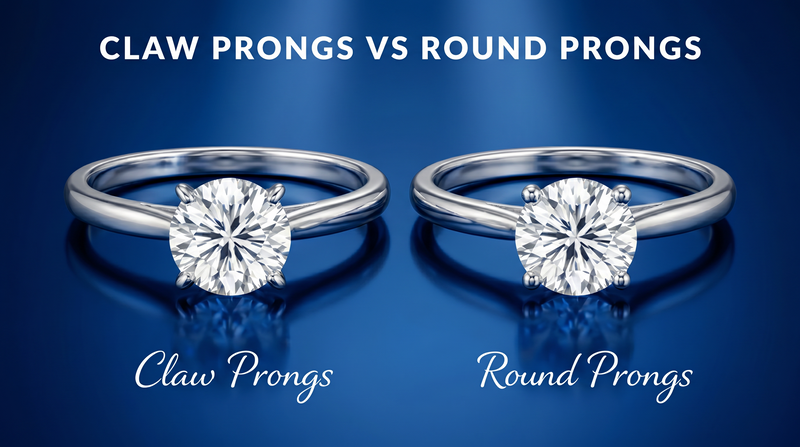
Claw Prongs vs Round Prongs

• 6 min read

The majority of individuals who opt for an engagement ring concentrate mainly on the four significant characteristics - cut, color, clarity, and...

Shop Side Stone Diamond Engagement Rings

What Are Side Stone Engagement Rings?

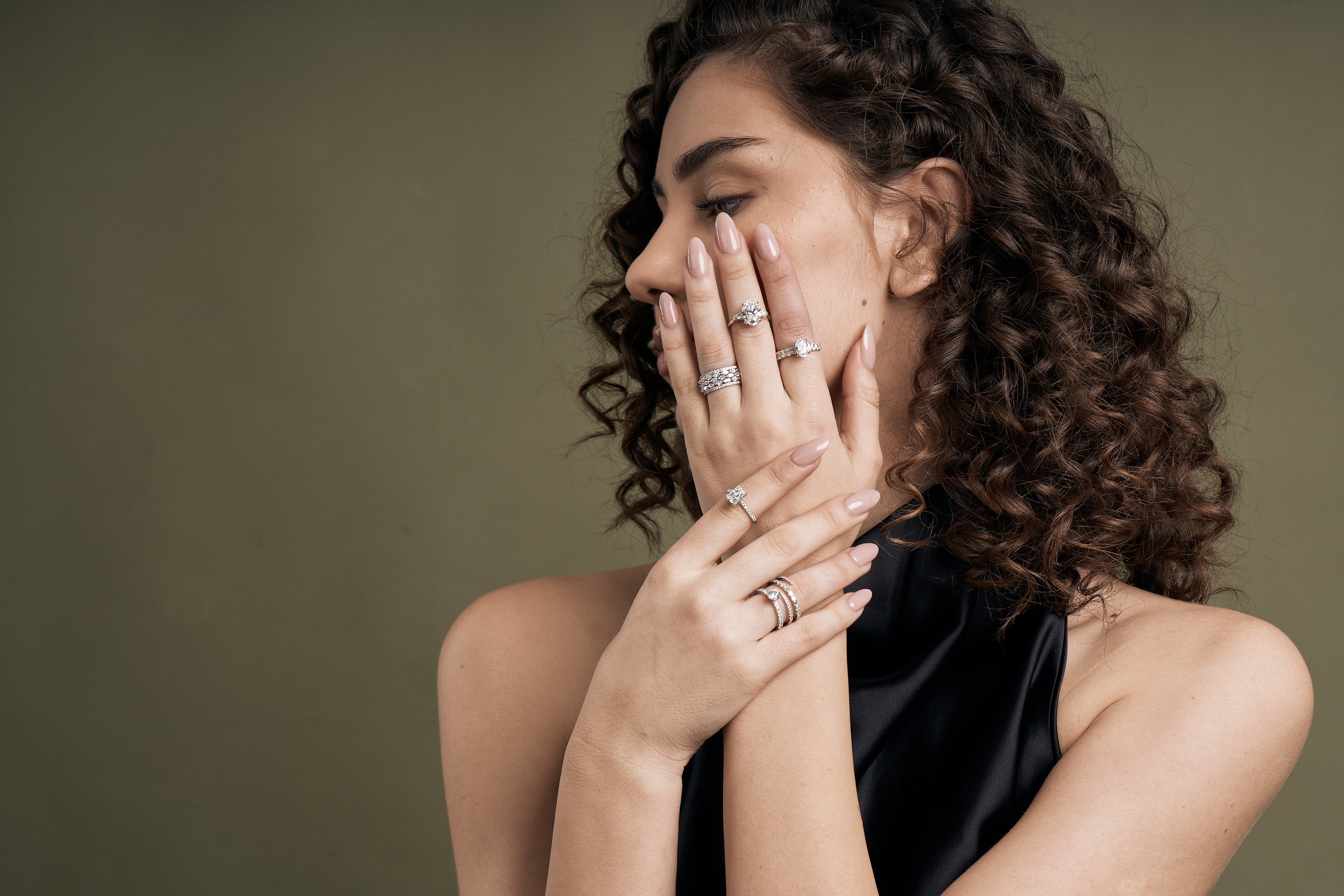
Side stone engagement rings have one center diamond with smaller accent stones set either side of it. The accents are deliberately subordinate, they frame the center rather than compete with it.

That's the design brief in one line: more ring, same star.

Side Stone vs Three Stone

These get confused constantly. The difference is size.

Side StoneThree Stone
Accent sizeMuch smaller than centerSubstantial, often matching
Visual balanceCenter clearly dominantThree stones read as equals
Typical accent0.05–0.25ct0.5ct and up
MeaningDecorative framingPast, present, future
Cost impactModestSignificant

If the outer stones read as accents, it's a side stone ring. If they stand on their own, it's a three stone ring.

Popular Side Stone Shapes

The accent shape changes the ring's character:

Accent ShapeEffectPairs Well With
RoundSoft, classic, most versatileAny center shape
Tapered baguetteClean lines, art deco feelEmerald, asscher, round
PearSweeps outward, adds widthOval, round, cushion
TrillionBold, angular, modernRound, princess, radiant
MarquiseElongates the settingOval, pear, marquise

Tapered baguettes are the most understated, trillions the boldest. Round accents sit between them, which is why most side stone rings use them.

Do Side Stones Make the Ring Look Bigger?

Yes, but wider rather than larger. Side stone engagement rings extend the ring's footprint across your finger, covering more visual space than a solitaire with the same center stone.

What they don't do is make the center diamond itself look bigger, the way a halo does by framing its edge. If width and presence are what you want, side stones deliver.

Best Metals & Settings

  • Platinum is the most secure for small accents, never needs replating
  • 10k, 14k, 18k white gold offers the same bright look for less; replate every few years
  • 10k, 14k, and 18k yellow gold gives warm contrast that makes white accents stand out
  • Rose gold is the soft tone that suits pear and marquise accents

Accents are usually prong-set for sparkle or channel-set for a flush, snag-free finish. Channel setting is more practical if you work with your hands. Popular centers include round, oval and emerald.

Side Stone Rings at Precious Carbon

We supplied the diamond trade for over 20 years before selling direct.

Lab-grown side stone engagement rings are IGI certified, up to 70% below natural, with 50% off. Natural side stone rings are GIA certified and conflict-free under the Kimberley Process.

Every center stone is graded on the 4Cs and ships with its certificate, free shipping and 30-day returns. New here? See our engagement ring guide.

Frequently Asked Questions

What's the difference between side stone and three stone rings?

Side stones are small accents framing the center. Three stone rings use substantial, often matching stones that read as equals.

What stones are used as side stones?

Round, tapered baguette, pear and trillion accents are most common. Marquise accents appear on rings designed to look longer on the finger.

Do side stones make the ring look bigger?

They add width across the finger rather than making the center stone itself look larger. A halo does the latter.

Are your side stone diamonds certified?

Center stones are IGI certified for lab-grown and GIA certified for natural. Accent stones are matched to the center's grade.

Does a wedding band sit flush against side stones?

Often not. Accents extending down the shank can leave a gap, so a contoured band usually fits better than a straight one.

What if a side stone falls out?

This doesn't happen with quality setting work. An annual prong check helps catch loose stones early, and Precious Carbon's lifetime manufacturing warranty covers repairs for manufacturing defects, but it does not cover diamonds that have been lost or need to be replaced.