Cart
0

Engagement Ring Guide: How to Choose the Perfect Ring
Buying an engagement ring is one of the most meaningful purchases you'll ever make. You want it to be perfect, a ring that captures your love, delights your partner, and represents a smart investment.
This guide covers everything you need to know: how to choose the right diamond, popular ring styles, setting options, and how to get maximum value for your budget.
How to Choose the Perfect Diamond
The diamond is the heart of your engagement ring. Here's how to select one that sparkles brilliantly without overpaying.
The 4Cs Priority Order
When balancing quality and budget, prioritize in this order:
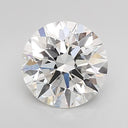
1. Cut (Most Important) Cut determines sparkle. Always choose Excellent or Very Good, never compromise here. A well-cut diamond looks larger and brighter than a poorly cut stone of higher carat weight.
2. Color (Second Priority) G-H color appears white and offers excellent value. For yellow or rose gold settings, I-J works beautifully as the warm metal masks any slight tint.
3. Clarity (Third Priority) VS2 or SI1 clarity is the sweet spot, "eye-clean" with no visible inclusions at significant savings compared to higher grades.
4. Carat (Last Priority) Buy the largest carat you can afford after meeting the above standards. A smaller, well-cut diamond always outshines a larger, poorly cut one.

Smart Diamond Buying Tips
- Buy just below magic numbers: A 0.90-carat diamond looks identical to a 1.00-carat but costs 15-20% less
- Prioritize eye-clean over flawless: VS2-SI1 looks the same as VVS to everyone who sees the ring
- Shape affects perceived size: Oval, marquise, and pear shapes look larger per carat than round
- Certification matters: Always buy GIA or IGI-certified diamonds

Popular Engagement Ring Styles
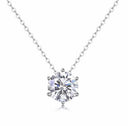
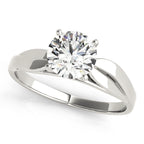
Solitaire
A single diamond on a simple band, the timeless classic that lets the diamond be the star.
Best for: Classic tastes, those who appreciate simplicity
Pros: Timeless, easy to match with wedding bands, showcases the diamond
Halo
A center diamond surrounded by smaller diamonds, creating the illusion of a larger stone with maximum sparkle.
Best for: Maximizing visual impact, budget-conscious buyers
Pros: Makes the center stone appear 20-30% larger, with exceptional brilliance
Three-Stone:
Three diamonds representing your past, present, and future, deeply romantic and symbolic.
Best for: Romantic symbolism, meaningful designs
Variations: Graduated sizes, matching shapes, mixed shapes
Pavé:
Tiny diamonds are set closely along the band, creating continuous sparkle from every angle.
Best for: Maximum sparkle, feminine and delicate appearance
Note: Tiny stones may require occasional maintenance
Side Stone:
A center diamond flanked by smaller diamonds, a balance between solitaire simplicity and added brilliance.
Best for: Those wanting more sparkle than solitaire, less busy than halo
Popular variations: Baguette side stones, tapered baguettes
Vintage-Inspired:
Designs featuring intricate details like milgrain, filigree, and hand engraving.
Best for: Those who love unique, detailed designs with old-world charm
Popular eras: Art Deco (geometric), Edwardian (lacy), Victorian (romantic)
Selecting the Right Setting
The setting affects security, appearance, and lifestyle compatibility.
Prong Settings
| Type | Best For |
|---|---|
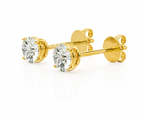
| 4-prong | Maximum diamond visibility; sleek look |
| 6-prong | More security, active lifestyles |
| V-prong | Protecting pointed ends (princess, pear, marquise) |
Bezel Setting
Bezel Setting:
A metal rim surrounds the diamond completely, creating a secure and modern look.
Benefits: Most secure setting, smooth edges that won't snag
Best for: Active lifestyles and those who work with their hands
Cathedral Setting:
Arches of metal rise from the band to support the diamond.
Look: Elegant profile that elevates the stone
Best for: Traditional and romantic tastes
Metal Options
| Metal | Key Features | Price |
|---|---|---|
| Platinum | Naturally white, most durable, hypoallergenic | Highest |
| 18K White Gold | Bright white (rhodium-plated), excellent durability | Moderate-High |
| 14K White Gold | Good durability, may need occasional replating | Moderate |
| 18K Yellow Gold | Classic warm tone, rich color | Moderate |
| 14K Yellow Gold | Traditional look, excellent value | Moderate |
| Rose Gold | Romantic pink hue, universally flattering | Moderate |
Pro tip: Match your engagement ring metal to the wedding band you plan to wear with it.
How to Find the Right Ring Size
Sneaky Sizing Methods
Borrow an existing ring she wears on her left ring finger
Trace a ring on paper and bring it to a jeweler
Ask friends or family who might know or can find out
Average Sizes
Women's average: Size 6
Common range: Size 5 to 7
When in doubt: Size up slightly, it's easier to resize down than up
Resize Policy
Always confirm that your jeweler offers free resizing within a reasonable period. Most reputable jewelers include one complimentary resize.
Natural vs. Lab-Grown Diamonds
Natural Diamonds
Formed over billions of years deep within the Earth
Traditional choice with historical significance
Stronger resale market
Higher cost per carat
Lab Grown Diamonds
Chemically, physically, and optically identical to natural
50-80% less expensive
Larger, higher-quality stone for the same budget
Environmentally friendlier production
.
How to Decide
Choose natural if: Rarity and natural origin matter to you, or you view it as a long-term investment.
Choose lab-grown if: You want maximum size and quality for your budget, or environmental impact is a priority.
Both result in a beautiful, real diamond ring. Neither choice is wrong - it comes down to personal values.
Budgeting and Getting the Best Value
How Much Should You Spend?
Forget the outdated "three months' salary" rule. The right budget is what you can comfortably afford without financial stress. Beautiful engagement rings exist at every price point.
Forget the outdated "three months' salary" rule. The right budget is what you can comfortably afford without financial stress. Beautiful engagement rings exist at every price point.
Maximizing Value
| Budget | Natural Diamond | Lab-Grown Diamond |
|---|---|---|
| Under $3,000 | 0.50-0.75 ct, excellent cut | 1.00-1.25 ct, excellent cut |
| $3,000-$6,000 | 0.75-1.10 ct, G-H color, VS2-SI1 | 1.25-1.75 ct, F-G color, VS1-VS2 |
| $6,000-$12,000 | 1.00-1.50 ct, excellent quality | 2.00-2.50 ct, excellent quality |
| $12,000+ | 1.50+ ct, top-tier quality | 3.00+ ct, exceptional quality |
Value-Boosting Strategies
Buy shy of magic numbers: 0.90 ct instead of 1.00 ct saves 15-20%
Prioritize cut: Better cut = more sparkle = looks larger
Go near-colorless: G-H saves money with an identical appearance
Choose eye-clean clarity: VS2-SI1 looks the same as higher grades
Consider fancy shapes: Ovals and pears look larger than rounds
Explore lab-grown: Same beauty at 50-80% less
Frequently Asked Questions
What is the most popular engagement ring style?
Solitaire and halo settings remain the most popular. Solitaires appeal to classic tastes, while halos maximize sparkle and make the center stone appear larger. Round brilliant is the most popular diamond shape, followed by oval.
How much should I spend on an engagement ring?
Spend what you can comfortably afford. The average engagement ring in the US costs $5,000-$7,000, but beautiful rings exist at every price point. Focus on what makes you and your partner happy without causing financial stress.
Is it OK to buy a lab-grown diamond engagement ring?
Absolutely. Lab grown diamonds are chemically identical to natural diamonds, with the same sparkle and the same durability. Many couples prefer lab grown for better value (50-80% less expensive) and environmental considerations. The choice is personal; neither is "better."
What diamond shape looks biggest?
Elongated shapes look larger per carat. Marquise appears the largest (up to 15% bigger looking), followed by pear and oval (about 10% bigger). Round brilliants have the most sparkle, which also creates an impression of size.
What if she doesn't like the ring?
Most reputable jewelers offer exchange policies, so you can swap styles while keeping the diamond, or exchange entirely. Confirm your jeweler's exchange policy before purchasing. Shopping together afterward can also be a bonding experience.
How do I care for an engagement ring?
Clean regularly with warm water, mild dish soap, and a soft brush. Have it professionally inspected every 6-12 months to ensure prongs are secure. Remove during activities that could cause damage. Get it insured immediately.
When should I start ring shopping?
Start 6-8 weeks before you plan to propose for research, shopping, and any resizing. For custom designs, allow 8-12 weeks.
Find Your Perfect Engagement Ring
Our diamond experts are here to help you find a ring that perfectly captures your love story, premium quality at a price that makes sense.