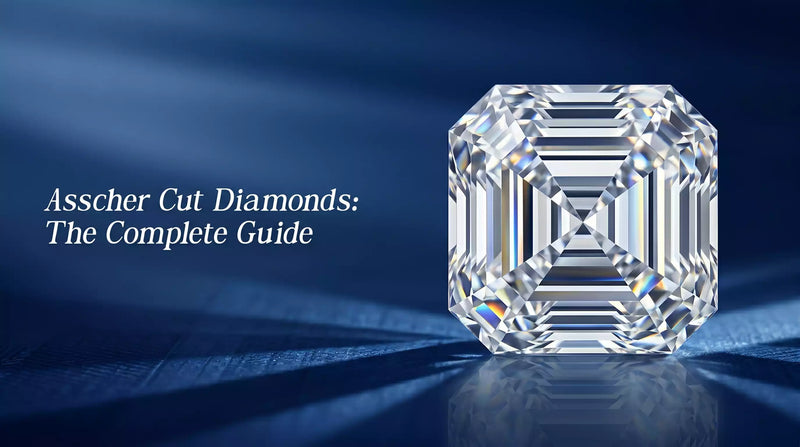
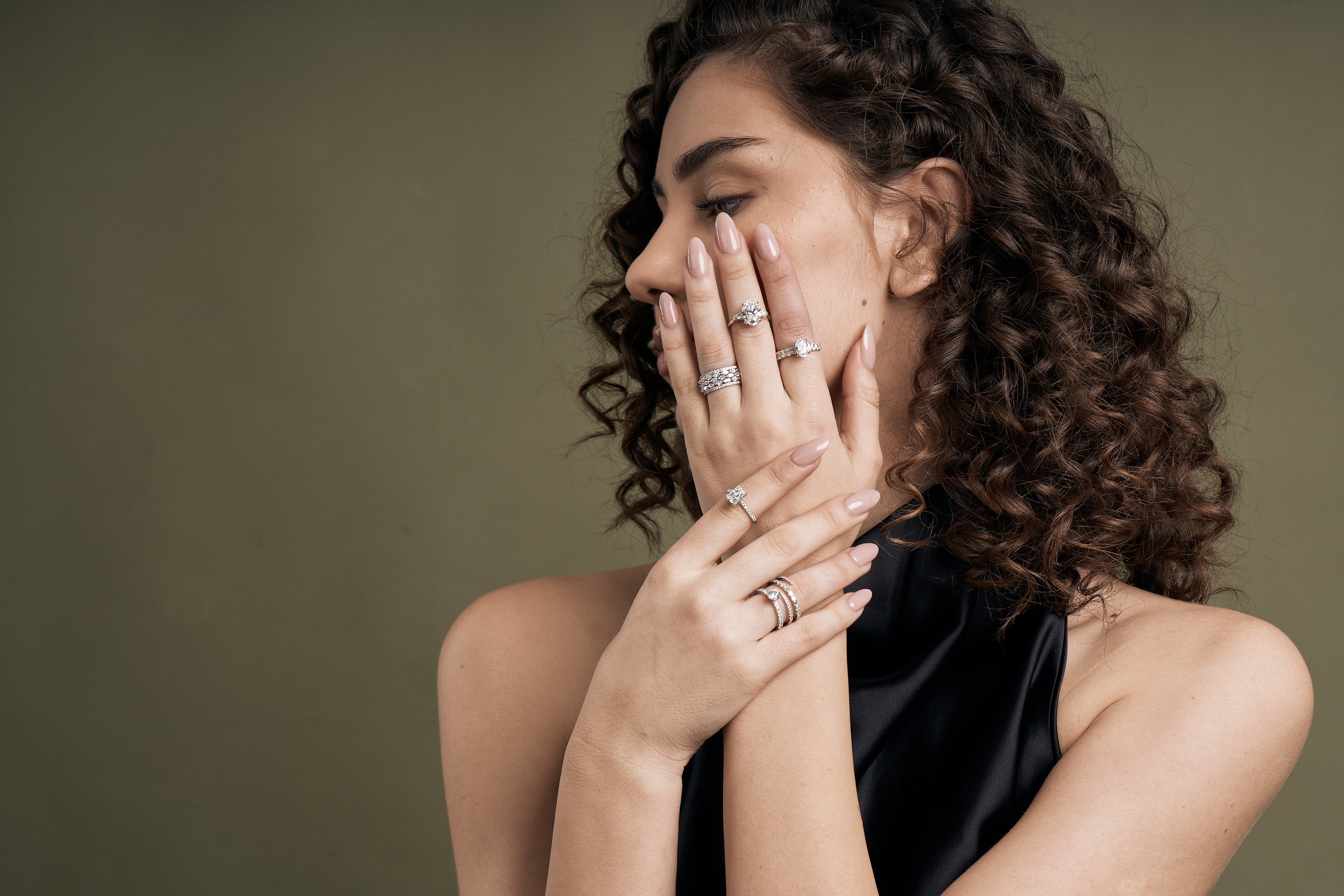
Asscher cut lab grown diamonds are square step cuts with an Art Deco hall-of-mirrors depth. IGI certified and 50% off, they reward higher clarity and color because step cuts show inclusions. Best paired with vintage settings.
What Is an Asscher Cut Diamond?
Square outline, clipped corners, facets cut in flat parallel rows rather than tiny triangles. That makes it a step cut, light returns in broad flashes, not fine glitter.
Designed in 1902 and everywhere by the 1920s, which is why an asscher cut lab grown diamond reads Art Deco even in a plain setting.
Is an Asscher Just a Square Emerald Cut?
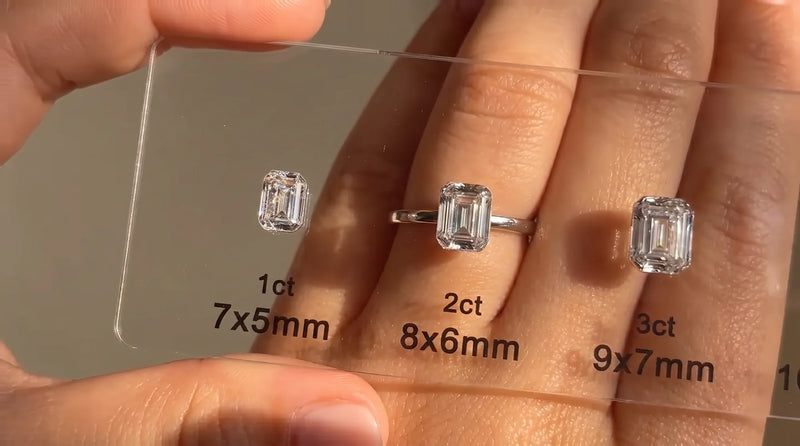
No, and it's worth getting right before you buy. Both are step cuts, so the resemblance is real. The differences are structural:
| Asscher | Emerald |
|---|
| Outline | Square | Rectangular |
| Facets | 58 | 57 |
| Crown height | Taller | Shallower |
| Step depth | Steeper, more layers | Gentler |
| Signature look | X of light down the diagonals | Long parallel flashes |
The X is the giveaway. An asscher cut lab grown diamond pulls light from its corners into a cross at the center. Emerald cuts can't, rectangular geometry sends light along the length instead. More depth here, more elongation there.
Why Buy Higher Clarity for an Asscher
Buy VS2 or the better one. Step cuts have open facets and no busy sparkle to hide behind. An inclusion that vanishes inside a round sits visible in a lab grown asscher diamond, right in the middle of your view.
Same for color: G or higher in white metal, and yellow gold forgives more.
On a fixed budget, take a smaller VS2 over a larger SI2, as the bigger stone looks worse.
What Is the Hall-of-Mirrors Effect?
Concentric squares of facet reflecting each other, receding toward the base. Brilliant cuts throw light back at you while step cuts let you see into the stone, and an asscher's steep stacked steps multiply those reflections more than any shape. Hence the name.
It's also why cut quality matters more than the report suggests, a poorly proportioned asscher looks flat, not deep.
Best Settings for an Asscher
- Vintage, the natural home; milgrain suits the era
- Three stone with tapered baguettes, definitive Art Deco
- Solitaire, clean lines, nothing competing
- Halo, adds sparkle a step cut won't generate
Four prongs at the clipped corners is standard. Those corners are sound, so an asscher takes daily wear well.
Asscher Cut Lab Grown Diamond Prices
Most 1 carat asscher cut lab grown diamonds are priced between $250 to $800, depending on color, clarity, and cut. They are less expensive per carat than rounds because the square shape consumes less rough. Clarity carries more weight here though, so spend on a clean VS2 rather than extra carats.
Asscher Cut Lab Grown Diamonds at Precious Carbon
Two decades supplying other jewelers came before we sold a stone direct. Our asscher cut lab grown diamonds are IGI or GIA certified against the 4Cs, ship free, and return within 30 days. Comparing step cuts? See the diamond shape guide or natural asschers.

 Moissanite Pendant
1 Carat round Moissanite Pendant in 925 Silver with Chain
Spend $1,000+