Cart
0

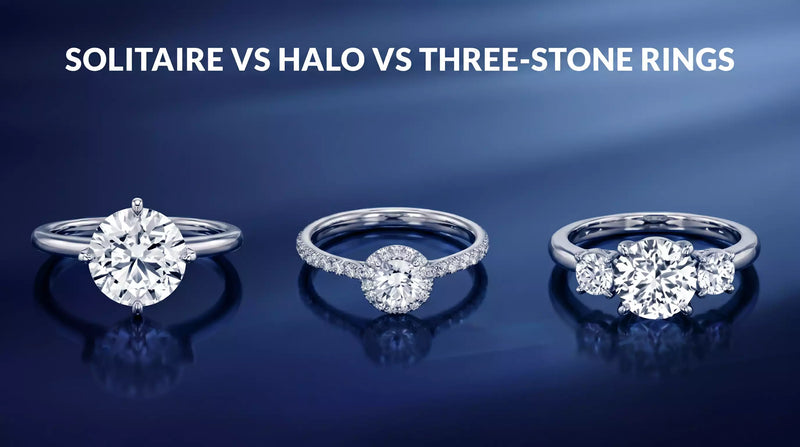
Solitaire vs Halo vs Three-Stone Rings
A solitaire features one diamond on a simple band, timeless, clean, and lets the stone speak for itself. A halo surrounds the...
We're here to guide you—just tap to call and speak with our team instantly.

We're having trouble loading reviews right now.
A solitaire features one diamond on a simple band, timeless, clean, and lets the stone speak for itself. A halo surrounds the...
You have the most perfect-looking diamond wedding ring in mind, but you can’t find it online or at stores. Either the band...
The majority of individuals who opt for an engagement ring concentrate mainly on the four significant characteristics - cut, color, clarity, and...
Solitaire engagement rings known for its single diamond on a clean band where all the focus lands on a center stone. It's the most trending, and budget-efficient setting, with no multiple side stones. This ring is more of the diamond itself and also available in lab-grown and natural.
One single diamond and no accent stones is a solitaire engagement ring. The band is plain and the prongs lift the stone into the light. That simplicity is the point. A solitaire diamond ring shows the stone honestly, its shape, its cut, the way it moves.
Solitaire is the most affordable setting type we sell. Every other style adds stones, and stones add cost.
Take a $1000 budget. In a halo, a few hundred dollars goes into accent diamonds. In a solitaire, all of it goes into the center stone, a visibly larger diamond for the same money.
That's why affordable solitaire engagement rings are the smart buy, not a compromise. Three more reasons:
Neither is better between 4 vs 6 prong solitaires, they both trade off against each other.
| 4 Prongs | 6 Prongs | |
|---|---|---|
| Diamond visible | More | Slightly less |
| Light entering the stone | More | Slightly less |
| Security | Good | Better |
| Look | Squarer, modern | Rounder, classic |
| Best for | Everyday wear, square shapes | Larger stones, active hands |
Every shape works in solitaire engagement rings. Some bring something specific:
Elongated shapes cover more fingers at the same carat weight, so oval and pear read bigger.
At G color or below, yellow and rose gold hide the warmth. Platinum shows it.
Both are diamonds, both graded on the 4Cs. The difference is origin and price.
Lab-grown solitaire diamond engagement rings are IGI certified and run up to 70% below natural, with 50% off our lab collection. The same budget buys a larger stone.
Natural solitaires are GIA certified and conflict-free under the Kimberley Process. You pay for rarity, and they hold resale value better.
Precious Carbon supplied the diamond trade for over 20 years before selling direct. That's why our solitaire engagement rings are priced the way they are.
Every solitaire diamond ring ships with its certificate, free US shipping, free resizing for 90 days and 30-day returns.
Gift With Purchase
Spend $1,000
for a FREE gift with purchase
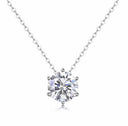
1 Carat round Moissanite Pendant in 925 Silver with Chain
Spend $2,500+
1 Carat round Moissanite Pendant in 925 Silver with Chain + 1 Lab Diamond Stud Earrings (1/2 ct. tw.)
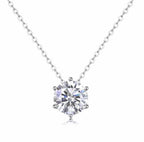
Moissanite Pendant
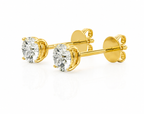
Lab Diamond Stud
50% OFF Lab Diamonds
Spend $400 or more on Lab Diamonds and get 50% OFF automatically at checkout.
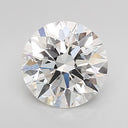
Lab Grown Diamonds
20% OFF Settings

Settings
Complete Your Bridal Set
Buy an engagement ring and get 15% off a matching wedding band.
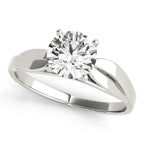
Engagement Ring
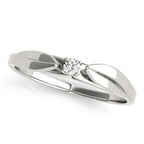
Wedding Band
15% OFF On Matching Band