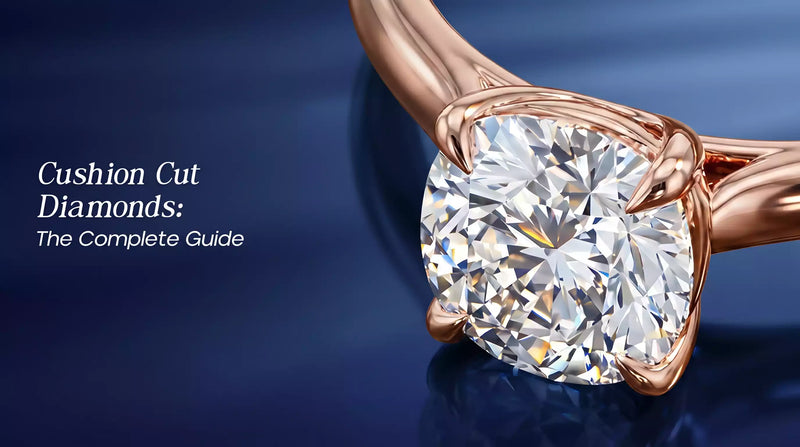
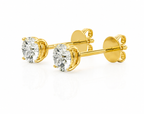
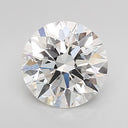
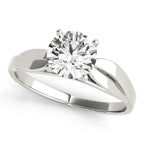
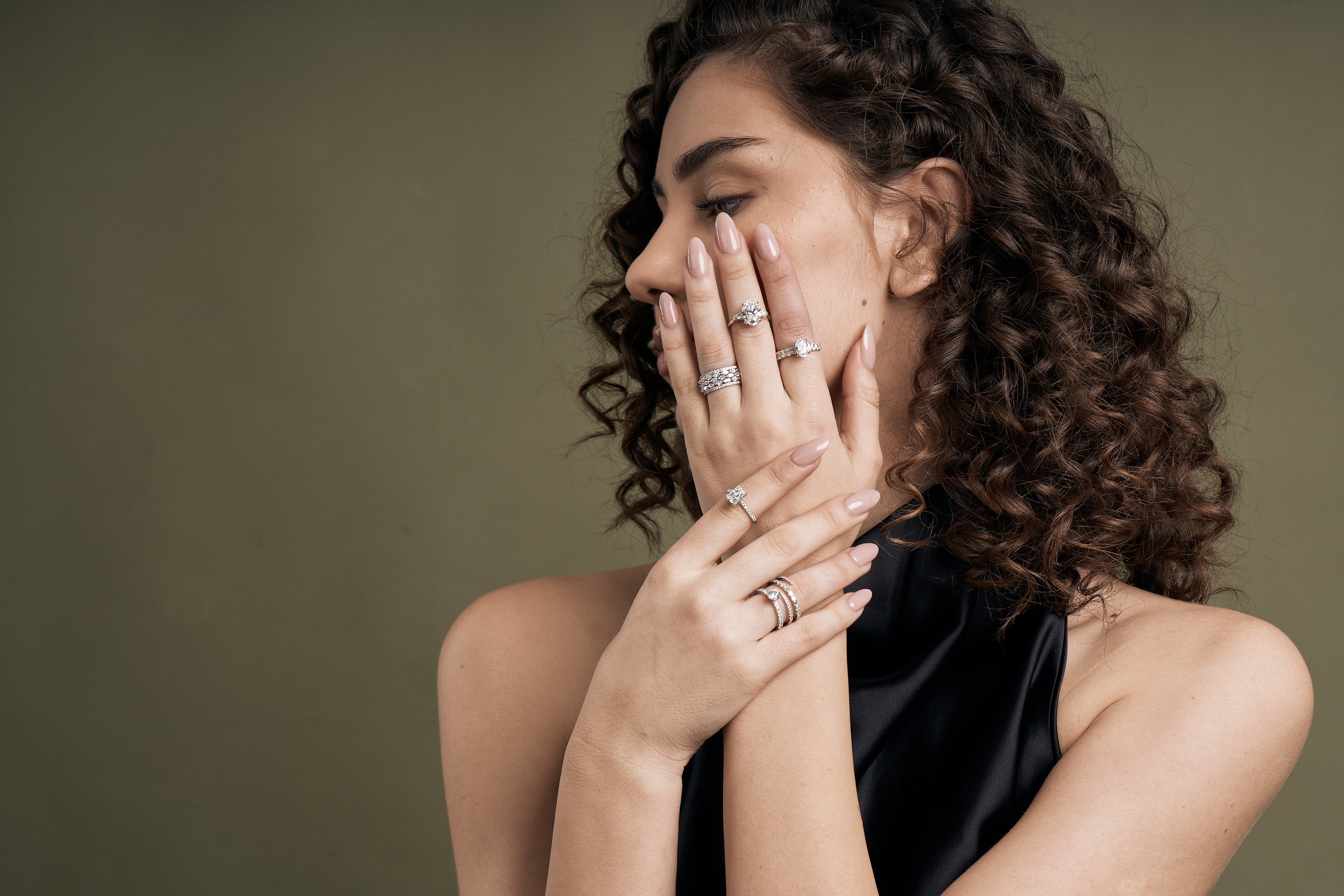
Cushion cut lab grown diamonds have soft, rounded corners and vintage charm, with exceptional fire. IGI certified and 50% off, they hide inclusions well and offer strong value per carat. Choose between a crushed-ice or chunky facet look.
What Is a Cushion Cut Diamond?
Square or slightly rectangular, corners rounded, edges curving gently, hence the pillow name.
Its ancestor is the old mine cut, worked by hand before electric light. Cutters optimized for candle flame: larger facets throwing broad colorful flashes rather than fine glitter.
A cushion cut lab grown diamond keeps that character, giving more fire, flashes of colored light as the stone moves, than almost any shape.
Crushed Ice vs Chunky Cushion
Two versions of the same shape. The difference is obvious once you know how to look.
| Crushed Ice | Chunky |
|---|
| Facets | Many, small | Fewer, larger |
| Effect | Scattered glitter | Bold defined flashes |
| Hides inclusions | Very well | Less well |
| Best for | Maximum sparkle | Vintage character |
Chunky cushions are sometimes labelled antique or old mine. They're the closer match to the historical cut and pair naturally with vintage settings.
Why Do Some Cushion Cuts Look Cloudy?
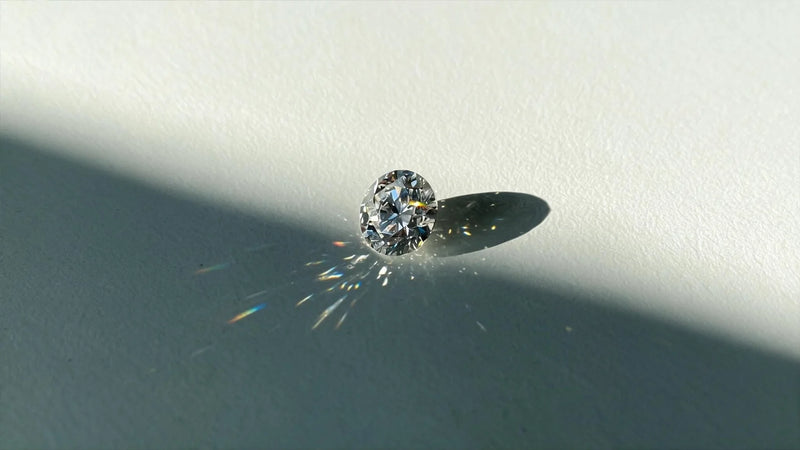
The most common worry about cushions, and the answer is reassuring. A crushed-ice cushion cut lab grown diamond scatters light into hundreds of tiny flashes rather than a few large ones. In bright light that's sparkle. In dim light or a photograph, the same effect can read as haze.
It usually isn't cloudy. Genuine haze comes from heavy inclusions and shows on the grading report. Crushed-ice scatter is just the faceting working, and larger facets give distinct flashes and never read milky.
What Clarity to Choose
SI1 is genuinely usable, and in a crushed-ice stone you can often go further. The faceting does the work, light scatters across many small surfaces, so inclusions have nowhere obvious to sit. The opposite of an emerald or asscher, where an open table leaves everything on display.
For color, G–H holds up well, and a lab grown cushion cut diamond in yellow gold can go lower still. Spend the savings on cut quality. That's what determines whether you get real fire or a flat stone.
Is a Cushion Cut Good Value?
Yes, on three counts.
- Less rough wasted than a round, so the price per carat is lower
- SI clarity works, so you're not forced up the scale
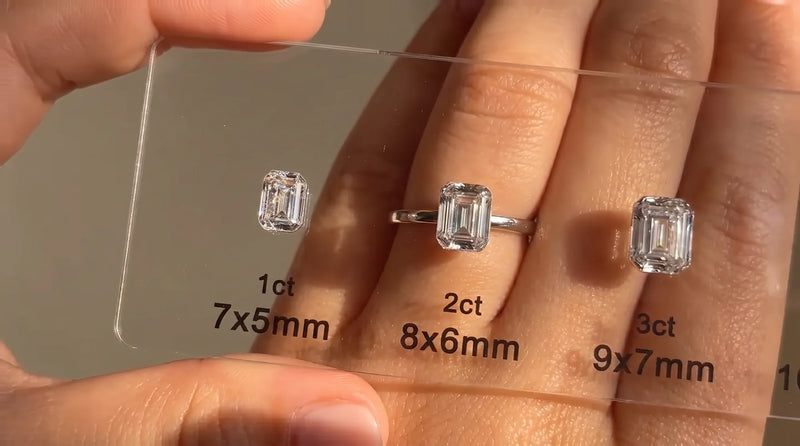
- More spread than a princess of equal weight, so it looks larger
Most 1 carat cushions run $250 to $800. Combine the lower per-carat price with usable SI clarity and a cushion cut lab diamond stretches a budget further than most shapes here.
Best Settings for a Cushion
The halo is the classic pairing for a reason: its outline echoes the cushion's curve rather than fighting it, and adds 0.25–0.5ct of visual size. Beyond that:
- Vintage, chunky cushions in milgrain look genuinely period
- Solitaire, clean, and lets the fire show
- Three stone, round or pear sides echo the curves
Four prongs at the rounded corners is standard, and those corners are sturdy.
Cushion Cut Lab Grown Diamonds at Precious Carbon
Two decades supplying other jewelers came before any of this reached the public. Every cushion cut lab grown diamond is IGI or GIA certified against the 4Cs, ships free, and returns within 30 days. Comparing cuts? See the diamond shape guide or natural cushions.

 Moissanite Pendant
1 Carat round Moissanite Pendant in 925 Silver with Chain
Spend $1,000+