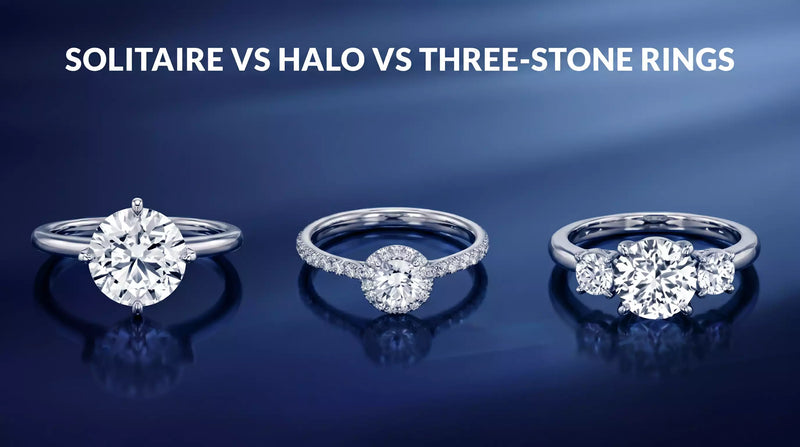
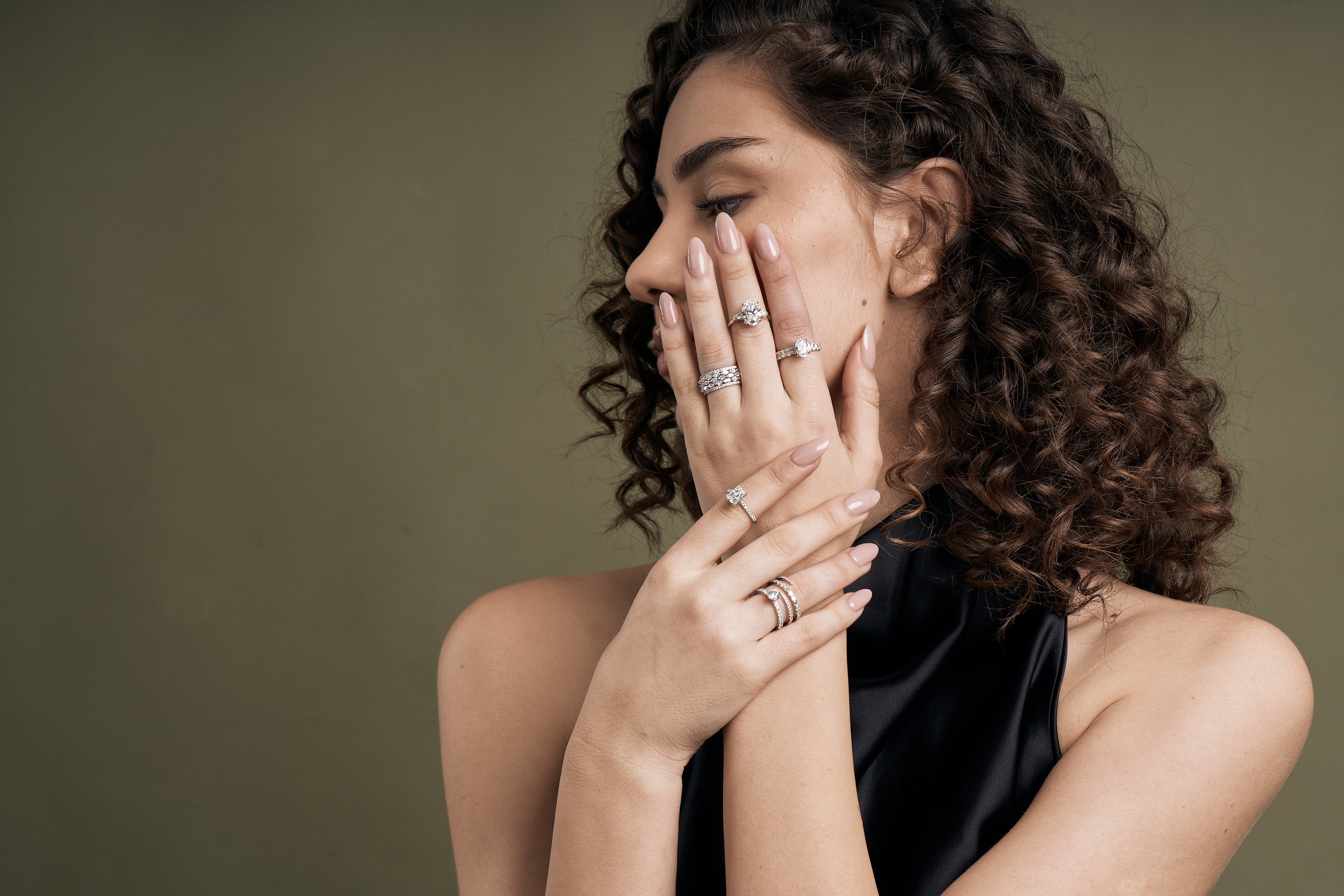
A three stone engagement ring has one center diamond with two substantial stones set either side. The sides are usually matched to each other, and often to the center's shape and grade. The three stones represent your past, present and future.
What Is a Three Stone Engagement Ring?
A three stone engagement ring has one center diamond with two substantial stones set either side. The sides are usually matched to each other, and often to the center's shape and grade.
The key word is substantial. In a three stone engagement ring the outer diamonds are typically 0.5ct and up, big enough to read as diamonds in their own right. That's what separates it from a side stone ring, where accents sit around 0.05–0.25ct and simply frame the center.
You'll also see it written as a 3 stone engagement ring. Same thing.
What Do the Three Stones Symbolize?
The three stones represent your past, present and future.
It's the most widely recognized meaning in engagement ring design, and it's why the setting shows up so often at milestones rather than only at proposals.
Couples read it in other ways too, friendship, love and commitment, or simply the two of you plus the life you're building. The symbolism is part of why a three stone diamond ring gets chosen for anniversaries and upgrades as much as first engagements.
Best Side Stone Shapes for a Three Stone Ring
The side shape changes the ring's whole character:
| Side Shape | Effect | Best Center Pairing |
|---|
| Round | Classic, softest, most versatile | Round, cushion, oval |
| Pear | Sweeps outward, adds width | Oval, round, cushion |
| Emerald | Long, architectural | Emerald, oval |
| Trapezoid | Clean angular flanks, modern | Emerald, radiant, princess |
Our pick: round sides with a round center is the safest and most popular combination. Pear sides are the best choice if you want the ring to look wider on the finger.
Are Three Stone Rings More Expensive?
Usually yes, you're buying roughly twice the total carat weight. A 1ct solitaire is one diamond. A three stone engagement ring with a 1ct center and two 0.5ct sides is 2ct of diamond in total. The price follows the carats.
Here's where lab-grown changes the math. Three substantial stones was historically the expensive way to buy a ring. With lab-grown diamonds at up to 70% below natural, three large stones fit budgets that would only stretch to one natural solitaire. That's the single biggest reason this setting has come back.
Best Settings & Metals
- Platinum is the hardest-wearing, holds three stones securely, never needs replating
- 10k, 14k, 18k white gold gives the same look for less; replate every few years
- 10k, 14k, and 18k yellow gold gives warm contrast that separates the three stones visually
- Rose gold offers a soft tone that flatters pear sides best
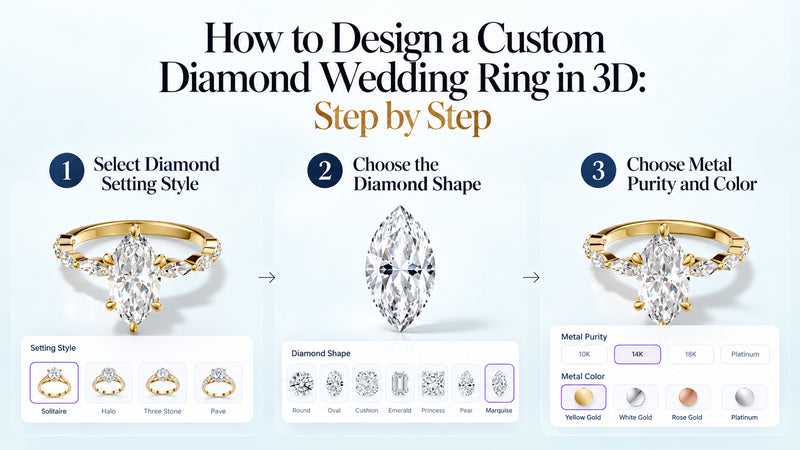
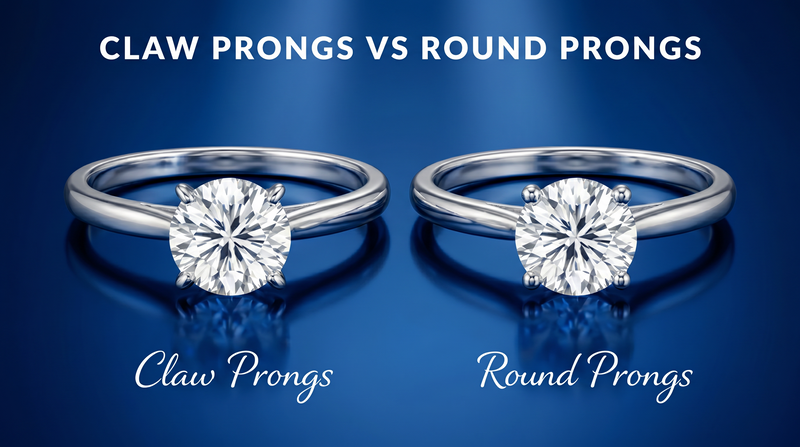
Most three stone engagement rings use prong settings on all three stones for maximum light. A bezel or half-bezel on the sides is worth considering if you're hard on your hands, since the outer stones sit at the edge where knocks land.
Lab-Grown vs Natural Three Stone Rings
Both are diamonds, both graded on the 4Cs. The difference is origin and price.
Lab-grown three stone engagement rings are IGI or GIA certified and run up to 70% below natural, with 50% off our lab collection. This is the setting where that gap matters most, you're buying three stones, so the saving multiplies.
Natural three stone rings are GIA certified and conflict-free under the Kimberley Process. You pay for rarity, and they hold resale value better.
Three Stone Rings at Precious Carbon
We supplied the diamond trade for over 20 years before selling direct. That's why our pricing sits where it does.
Popular center shapes include round, oval and emerald. Every stone ships with its certificate, free shipping, free resizing and 30-day returns. New here? See our engagement ring guide.

 Moissanite Pendant
1 Carat round Moissanite Pendant in 925 Silver with Chain
Spend $1,000+