What Our Customers Are Saying

Natural Diamond Education

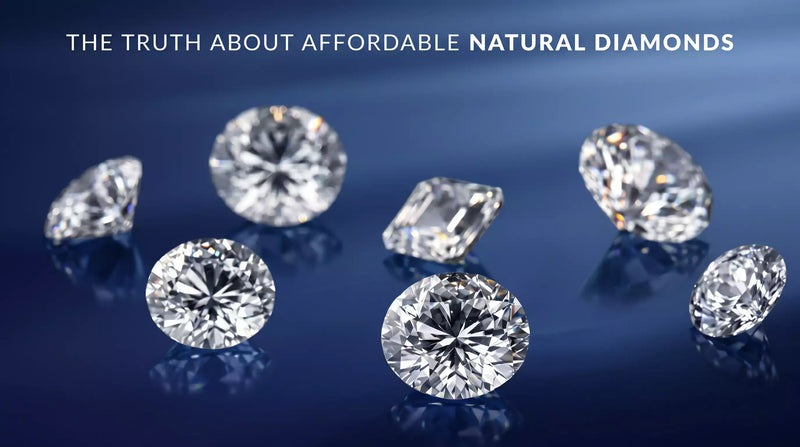
The Truth About Affordable Natural Diamonds

• 7 min read

Natural diamonds become significantly more affordable when you buy just below carat milestones (0.90 ct vs 1.00 ct saves 15–20%), prioritize cut...

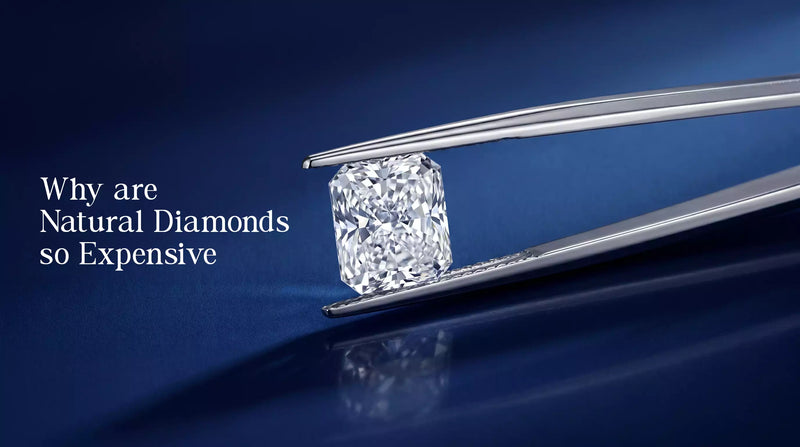
Why are Natural Diamonds so Expensive?

• 9 min read

Diamonds, often termed as a symbol of eternal love and luxury, have captivated human fascination for centuries. From ancient civilizations to modern-day...

Shop Natural Round Diamond

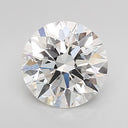
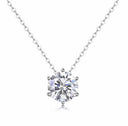
Natural round brilliant diamonds are the most dazzling and sought-after shape. They're formed billions of years ago and have the highest resale value of any cut. Natural round diamonds are GIA certified, ethically sourced, conflict-free, and far less expensive than jewelers on the high street.

What Is a Natural Round Diamond?

A diamond is created underground over geological time, cut into a dazzling round shape, and graded by a separate lab.

Since both are pure carbon and grade on the same scale, the difference between them and a lab-grown stone is origin rather than substance. The resale value of a genuine round diamond is based on its geological scarcity, which is something a lab stone cannot claim.

Do Natural Round Diamonds Hold Their Value?

Better than any other shape. Round is the most liquid diamond on the resale market, for a straightforward reason: demand.

Roughly two-thirds of diamonds sold are round. That means a buyer already exists for whatever you own, which is not true of a marquise or a heart. Fancy shapes trade at wider discounts simply because the pool of interested buyers is smaller.

Two things support that resale value:

  • Scarcity: Supply is geologically finite. Nothing changes that.
  • GIA grading: An independent report means a future buyer isn't taking your word for the quality.

Nobody should buy a diamond as an investment. But if resale matters to you at all, a round natural diamond is the shape that holds up best.

GIA Certification & Ethical Sourcing

Every natural diamond here is GIA certified, with a report number laser-inscribed on the girdle so the stone and its paperwork can't be separated.

They're also Kimberley Process certified and conflict-free, sourced through a chain of custody designed to keep conflict diamonds out of the legitimate supply.

Both matter more on a natural stone than a lab one. With a mined diamond you're buying provenance, and provenance only means something if it's documented.

Natural Round Diamonds at Precious Carbon

Two decades of supplying jewelers came before we sold anything direct, which is why a GIA-certified natural round brilliant diamond costs less here than on a high street.

Every stone with Precious Carbon is graded on the 4Cs, also ships free, and has a return policy within 30 days. Weighing natural against lab-grown? Our diamond shape guide compares cuts, and the lab-grown collection sits alongside this one.

Frequently Asked Questions

Do natural round diamonds hold their value?

Round resells better than any other shape, about two-thirds of diamonds sold are round, so the buyer pool is largest.

Are your round natural diamonds GIA certified or not?

Yes, they're GIA certified, we give you the report number laser-inscribed on the girdle. You can match the stone and its grading with the same number.

Are your natural diamonds conflict-free?

Yes. All are Kimberley Process certified, sourced through a documented chain of custody.

How old is a natural diamond?

Natural round brilliant diamonds are aged between 1-3 billion years. They completely formed roughly 100 miles underground and reached the surface through volcanic activity.

Which one do I need to buy, natural or lab-grown round diamonds?

Natural for geological rarity and resale. Lab-grown for size and grade at the same budget. Both are real diamonds.