Cart
0
Diamond Cut Guide: The Most Important Factor for a Brilliant Diamond
If you only remember one thing about buying a diamond, let it be this: cut is everything. A diamond's cut is the single most important factor determining how much it sparkles, how beautiful it looks, and how impressive it appears on the hand. You can have the highest color grade, perfect clarity, and impressive carat weight, but if the cut is poor, your diamond will look dull and lifeless. The good news? Once you understand what makes a great cut, you'll never overpay for a diamond that underperforms. This guide explains exactly what diamond cut means, how it's graded, and how to choose a cut quality that maximizes brilliance and value.
What Is Diamond Cut?
Diamond cut refers to how well a diamond's facets interact with light, not the diamond's shape. It's a measure of craftsmanship: how precisely the diamond was cut from rough stone into a polished gem.
When a diamond cutter transforms a rough diamond into a sparkling jewel, they make critical decisions about:
Proportions - The angles and relative measurements of facets
Symmetry - How precisely facets align with each other
Polish - The smoothness of each facet's surface
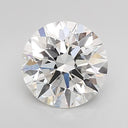
Get these right, and light enters the diamond, bounces around inside, and exits through the top in a spectacular display of brilliance and fire. Get them wrong, and light leaks out the sides or bottom, leaving you with a dull, dark diamond.

The Three Elements of Diamond Sparkle
A well-cut diamond produces three distinct visual effects:
Brilliance
The white light reflected from the diamond's interior and surface. This is the "brightness" you see when light hits the stone. A well-cut diamond appears luminous and alive.
Fire
The rainbow flashes you see when white light disperses into spectral colors (red, orange, yellow, green, blue, violet). Fire is what makes diamonds magical—those colorful flashes as the diamond moves.
Scintillation
The pattern of light and dark areas, plus the sparkle you see when the diamond, the light source, or your eye moves. It's that "twinkle" that catches attention from across the room.
All three effects depend almost entirely on cut quality. A diamond with poor cut will lack brilliance, show minimal fire, and have weak scintillation - regardless of its color or clarity grades.
Why Cut Matters More Than Any Other C
Here's a scenario that plays out every day: Someone buys a 1.5-carat, D color, VVS1 clarity diamond, top grades across the board, but chooses a "Good" cut to save money or maximize carat weight. They get the diamond home, and it looks... flat. Lifeless. Nothing like the sparklers they saw in the store.
Meanwhile, another buyer chooses a 1.2-carat, H color, VS2 diamond with Excellent cut. It's smaller, "lower" in color and clarity, and costs less, but it blazes with light. Everyone who sees it comments on how stunning it is.
The difference is cut.
What Poor Cut Looks Like
When a diamond is cut too shallow or too deep, light doesn't return to your eye properly:
Too Shallow: Light enters through the crown, hits the pavilion facets at the wrong angle, and leaks out the bottom. The diamond looks glassy and washed out, with dark areas in the center.
Too Deep: Light enters, bounces at steep angles, and escapes through the sides. The diamond appears dark in the middle, with a "nail head" effect that makes it look smaller than its carat weight.
Too Thick Girdle: Extra weight is hidden in the rim (girdle) rather than contributing to visual size. You pay for carats you can't see.
What Excellent Cut Looks Like
When proportions are optimized:
Light enters through the table (top)
Bounces off internal facets at precise angles
Returns through the crown with maximum intensity
Creates bright, even sparkle across the entire face
The diamond appears larger for its carat weight, brighter in any lighting, and more impressive overall. This is why we always recommend prioritizing cut above every other factor.

Diamond Cut Grades Explained
Excellent cut diamonds have proportions within the most stringent parameters. They maximize light return and command premium prices.
Very Good cut diamonds have slight deviations from ideal proportions, but still look stunning to the naked eye. The differences from Excellent are subtle and often invisible without side-by-side comparison.
Our recommendation: If the budget allows, choose Excellent. If you need to save money for carat weight or other factors, Very Good is still a beautiful choice. Never go below Very Good for your center diamond.
The GIA (Gemological Institute of America) grades round brilliant diamond cut on a five-point scale:
| Cut Grade | Light Performance | Visual Impact |
|---|---|---|
| Excellent | Reflects nearly all light; maximum brilliance and fire | Exceptional sparkle; appears larger |
| Very Good | Reflects most light; minor deviations from ideal | Outstanding sparkle; excellent value |
| Good | Reflects a majority of light; noticeable deviations | Above-average sparkle; budget option |
| Fair | Allows significant light leakage | Below-average appearance |
| Poor | Most light escapes; minimal return | Dull, lifeless appearance |
Other Lab Grading Systems
Different gemological laboratories use slightly different terminology:
AGS (American Gem Society) uses a numeric scale where 0 is the best (Ideal). Their grading is particularly rigorous for light performance.
| GIA | IGI | AGS |
|---|---|---|
| Excellent | Excellent | Ideal (0) |
| Very Good | Very Good | Excellent (1) |
| Good | Good | Very Good (2) |
| Fair | Fair | Good (3-4) |
| Poor | Poor | Fair/Poor (5-10) |
Anatomy of a Well-Cut Diamond
Understanding diamond anatomy helps you evaluate cut quality. Here are the key parts:
The Parts of a Diamond
Crown - The upper portion above the girdle. Contains the table and crown facets. This is where light enters and exits.
Table - The flat top facet. Light enters primarily through the table. Table percentage (table width ÷ diamond width) is a key proportion.
Girdle - The thin rim around the widest point. Can be faceted or polished smooth. Girdle thickness affects both durability and visual size.
Pavilion - The lower portion below the girdle. The pavilion angles determine how light bounces internally and returns to your eye.
Culet - The tiny point (or small facet) at the bottom. Modern diamonds typically have a pointed or very small culet for maximum light return.

Critical Proportions for Round Brilliant Diamonds
Add detailed information about your products, services, or any other content you want to share with your customers.
When these proportions work together in harmony, the result is a diamond that maximizes light performance.
| Proportion | Excellent Range | Impact |
|---|---|---|
| Table % | 54-57% | Too large = less fire; too small = less brilliance |
| Depth % | 59-62.5% | Too deep or shallow = light leakage |
| Crown Angle | 34-35° | Affects the balance of brilliance and fire |
| Pavilion Angle | 40.6-41° | Most critical for light return |
| Girdle | Thin to Slightly Thick | Too thin = chipping risk; too thick = hidden weight |
| Culet | None to Very Small | Large culet creates a visible "hole" in the stone |

Cut vs. Shape: Understanding the Difference
One of the most common confusions in diamond buying is mixing up "cut" and "shape." They're completely different concepts:
Shape = The outline/form of the diamond (round, oval, princess, cushion, etc.)
Cut = The quality of craftsmanship regardless of shape (Excellent, Very Good, Good, etc.)
You can have a round diamond with Excellent cut or a round diamond with Poor cut. You can have an oval diamond with Excellent cut or an oval diamond with Fair cut.
How to Evaluate Diamond Cut Quality
Beyond the cut grade on a certificate, here are practical ways to assess whether a diamond is well-cut:
1. Check the Cut Grade First
For round diamonds, always start with the GIA cut grade. We recommend Excellent or Very Good, never lower, for a center stone.
2. Look at the Numbers
Review the grading report for: Table: 54-58% Depth: 59-62.5% Crown angle: 34-35° Pavilion angle: 40.6-41°Girdle: Thin to Slightly Thick . If proportions fall outside these ranges, the diamond may underperform even with a "Very Good" grade.
3. Request Ideal Scope or Hearts & Arrows Images
Many jewelers provide light performance images:
Ideal Scope: Shows red for light return, white for light leakage. More red = better cut.
Hearts & Arrows: Top-cut round diamonds show a precise pattern of 8 hearts (from bottom) and 8 arrows (from top) when viewed through a special viewer.
ASET (Angular Spectrum Evaluation Tool): Similar to Ideal Scope; shows light performance with color coding.
4. View the Diamond in Multiple Lighting Conditions
A well-cut diamond sparkles beautifully in:
Diffused lighting (cloudy day, indirect light)
Spot lighting (direct lights, jewelry store)
Mixed lighting (restaurants, offices)
If a diamond only looks good under intense spotlights, the cut may not be optimized for real-world conditions.
5. Compare Side by Side
If possible, view multiple diamonds together. The differences in light performance between Excellent and Good cuts become obvious when you compare them directly.
Cut Recommendations by Diamond Shape
Since only round brilliant diamonds receive a formal cut grade from GIA, evaluating fancy shapes requires different approaches:
Round Brilliant
What to look for:
GIA cut grade: Excellent or Very Good
Table: 54-58%
Depth: 59-62.5%
Polish: Excellent or Very Good
Symmetry: Excellent or Very Good
Red flags: Depth over 63%, table over 60%, Fair or Poor polish/symmetry

The "Super Ideal" and "Hearts & Arrows" Premium
Some retailers market premium cut grades beyond standard "Excellent":
Hearts & Arrows Diamonds
These are round diamonds cut with such precision that they display a symmetrical pattern:
8 arrows visible from the top (crown view)
8 hearts visible from the bottom (pavilion view)
Hearts & Arrows diamonds typically command a 10-15% premium over a standard Excellent cut. The visual difference in sparkle is subtle, but the precision is impressive.
Super Ideal / Ideal Plus / True Hearts
Various brand names for diamonds with proportions optimized beyond GIA Excellent standards. These often have:
- Tighter proportion ranges
- Higher light performance scores
- AGS Ideal (0) grades
Are they worth it? For diamond enthusiasts who appreciate technical perfection, yes. For most buyers, a GIA Excellent cut delivers stunning beauty at a better value.
Frequently Asked Questions About Diamond Cut
What is the best cut for a diamond?
Excellent cut (GIA) or Ideal cut (AGS) represents the highest level of craftsmanship and light performance. These diamonds are cut to precise proportions that maximize brilliance, fire, and scintillation. For round diamonds, always choose Excellent or Very Good cut. The visual difference compared to lower grades is significant and immediately noticeable.
Is a Very Good cut good enough?
Yes, Very Good cut diamonds are still beautiful and offer excellent value. The differences from Excellent cut are subtle, slight variations in proportions that minimally affect light performance. Many buyers can't distinguish Very Good from Excellent without direct comparison. If budget is a factor, Very Good cut is a smart choice that still delivers impressive sparkle.
Does cutting affect how big a diamond looks?
Absolutely. A well-cut diamond maximizes its face-up surface area, making it appear larger for its carat weight. A poorly cut diamond may hide weight in depth or girdle thickness, appearing smaller than expected. Two 1-carat diamonds can look noticeably different in size based purely on cut quality. This is why prioritizing cut actually helps you get more visual impact per carat.
Why is cut the most important of the 4Cs?
Cut directly controls how much light a diamond reflects and refracts. Color affects warmth, clarity affects inclusions, and carat affects size, but cut affects brilliance, fire, and scintillation all at once. A well-cut diamond with lower color/clarity grades will look more beautiful than a poorly cut diamond with perfect color and clarity. You see cut quality in every flash of light.
What's the difference between cut and shape?
Shape describes the diamond's outline (round, oval, princess, etc.), while cut describes the quality of craftsmanship within that shape. Every shape can be cut well or poorly. A round diamond can have Excellent cut or Poor cut. An oval can be beautifully proportioned or badly cut. Shape is your preference; cut is the quality measure you should always prioritize.
Do fancy-shaped diamonds have cut grades?
GIA only assigns formal cut grades to round brilliant diamonds because their symmetrical shape allows standardized assessment. For fancy shapes (oval, cushion, pear, etc.), you'll see Polish and Symmetry grades but not an overall cut grade. Evaluate fancy shapes using proportion guidelines, visual inspection, and light performance images when available.
What is a "Triple Excellent" diamond?
Triple Excellent (or Triple Ex) refers to a round diamond with Excellent grades in all three categories: Cut, Polish, and Symmetry. It indicates top-tier craftsmanship. While desirable, the differences between Triple Ex and "Ex-Ex-VG" (Excellent cut and polish, Very Good symmetry) are often invisible to the naked eye. Focus first on cut grade; polish and symmetry at Very Good+ are sufficient.
How much more does an Excellent cut cost?
Excellent cut diamonds typically cost 10-20% more than Very Good cut diamonds of equal size, color, and clarity. The premium reflects both the superior light performance and the fact that cutting for Excellent grades sacrifices more rough diamond weight. It's worth the investment because you'll notice the sparkle difference every day you wear the diamond.
Find Your Perfect Cut
Now you understand why cut is the king of the 4Cs. A well-cut diamond will sparkle brilliantly, appear larger for its size, and bring joy every time light hits it. Never compromise on cut quality, it's the one factor you'll notice every single day. Our diamond experts can help you find an Excellent cut diamond that maximizes your budget. Whether you're shopping for a round brilliant or a fancy shape, we'll ensure your diamond delivers the sparkle you deserve.