Cart
0

The majority of individuals who opt for an engagement ring concentrate mainly on the four significant characteristics - cut, color, clarity, and carat weight. However, there is one more characteristic aspect of design that has the same importance but is overlooked: the prong setting.
To be more specific, one can find two most common types - claw prongs and round prongs. Although they appear to be insignificant features, the shape of the prongs can influence the diamond's appearance and its security and durability to a great extent.
You might be wondering what the difference is between claw and round prongs. Or how does one know which is best for their engagement ring?
At Precious Carbon, it is up to the customer to make the choice between two styles, but at the same time, our personnel will guide the customer to the option that will harmonize the most with their diamond, lifestyle, and personal taste. The present guide will highlight the pros and cons of both prong styles, thereby giving you the opportunity to be sure of your choice and be a well-informed person.
What Is a Prong Ring Setting?
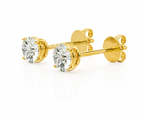
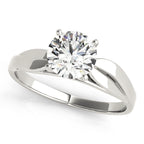
First, let’s make the basics clear. A prong setting is the conventional technique of placing diamonds or other gems on rings. There are very small metal claws (sometimes referred to as prongs) that keep the stone securely and firmly in place. The gap made by the prong setting enables the diamond to draw in the most light, hence the greater the brilliance and sparkle.
Most engagement rings are set with four or six prongs; however, the number may vary depending on the size and shape of the stone.
For example, Precious Carbon uses prong settings that are always hand-made and come with the necessary characteristics for long-lasting wear. It does not matter whether you want to have a plain solitaire look or like a hidden halo; it is very important to choose the correct prong type regarding both the fashion and the durability.
Claw Prongs vs Round Prongs: Key Differences

Let’s compare the two most popular prong styles side by side:
Claw Prongs
Claw prongs have sharp, angled tips that resemble tiny claws gently gripping the diamond’s corners. They are often pointed or V-shaped and used in elegant or modern ring designs.
Features:
-
Tapered or pointed tip
-
Provides a “talon-like” grip
-
Usually more visible than round prongs
Benefits:
-
Enhances the diamond’s outline - especially for fancy shapes (oval, pear, marquise)
-
Creates a sleek, modern, high-end look
-
Offers excellent stone security
Style Match: Claw prongs are mainly seen in solitaire engagement rings and vintage-inspired settings.
Round Prongs
Round prongs have a soft, rounded tip, like a bead. They are more traditional and subtly hug the corners of the stone without drawing much attention.
Features:
-
Rounded or dome-shaped tip
-
Softer visual appearance
-
Minimalistic
Benefits:
-
Timeless and classic look
-
Less likely to snag on clothes
-
Easier to clean and polish
Style Match: Round prongs are ideal for classic engagement ring styles. The setting is very discreet, and thus, the diamond shines by itself.
Round vs Claw Prongs: Which One Makes the Diamond Look Bigger?

It is a frequent inquiry, and the response relies upon the manner in which the prongs are included in the setting.
-
Claw prongs frequently produce the effect of a more elongated and open look, especially when they are coupled with delicate bands or raised mountings.
-
Round prongs are more discreet, which means they may let the diamond appear more centered or symmetrical, especially for classic cuts.
At Precious Carbon, we design your prongs based on the diamond shape, carat weight, and setting style you choose. With our free custom design service, you can even request a hybrid of both styles or opt for minimal prongs (for a floating diamond look).
Which Prong Style Is More Secure?
This depends more on craftsmanship and maintenance than shape - but in general:
-
Claw prongs provide excellent grip, especially when properly shaped and secured. However, their sharper tips can wear down over time.
-
Round prongs usually have more longevity than other styles because of not have sharp edges that cause snagging or bending.
Tip: All types of prongs ought to be inspected annually for stability, particularly those rings that are worn daily.
Choosing Based on Lifestyle & Maintenance
If you are a physically active person, you do handworks or you simply want a low-maintenance option:
-
Round prongs are the solution for you. They are less visible, soft, and cannot easily be won over by either clothes or hair.
If you are looking for a daring and high-fashion appearance and do not mind doing some maintenance from time to time:
-
Claw prongs offer that designer finish and elevate the profile of your ring.
Remember: At Precious Carbon, all the rings come with a lifetime warranty, free resizing, and complimentary annual servicing that ensures your prongs are tight and your diamond is secure.
Summary: Claw Prongs vs Round Prongs at a Glance
|
Feature |
Claw Prongs |
Round Prongs |
|
Look |
Sharp, elegant, modern |
Soft, classic, traditional |
|
Stone Grip |
Excellent grip, pointed hold |
Secure grip, rounded tip |
|
Maintenance |
May wear down over time |
Low-maintenance, smoother |
|
Style Match |
Fancy-shaped stones (oval, pear) |
Round & princess cuts |
|
Snag Risk |
Slightly higher |
Lower |
|
Visual Impact |
Accentuates the stone shape |
Minimal, let the diamond shine |
Final Thoughts
Whether you go with claw prongs or round prongs, the key is to choose a setting that complements your diamond, fits your lifestyle, and speaks to your style. Each has its unique aesthetic and functionality - but both, when crafted with precision, offer beauty and security.
At Precious Carbon, we custom-craft every engagement ring and wedding band, including your choice of prong style - at no additional cost. With our made-to-order process, free custom design, and transparent pricing, your dream ring is just a few clicks away.
Frequently Asked Questions:
Are claw prongs safer?
Claw prongs offer excellent grip but may need slightly more maintenance over time due to their sharper points. When crafted well (like ours), they’re just as secure as round prongs.
Are claw prongs more expensive?
Not necessarily. At Precious Carbon, there’s no extra cost for choosing claw or round prongs. However, claw prongs may involve more hand-finishing work, depending on the setting style.
Are the round prongs secure?
Yes, Round prongs are widely used in fine jewelry and provide a secure hold, especially for classic diamond shapes like round or cushion cuts.
What is a Prong Ring Setting?
A prong setting is a style where small metal arms (prongs) hold the diamond securely in place. It allows light to enter from multiple angles, maximizing sparkle.