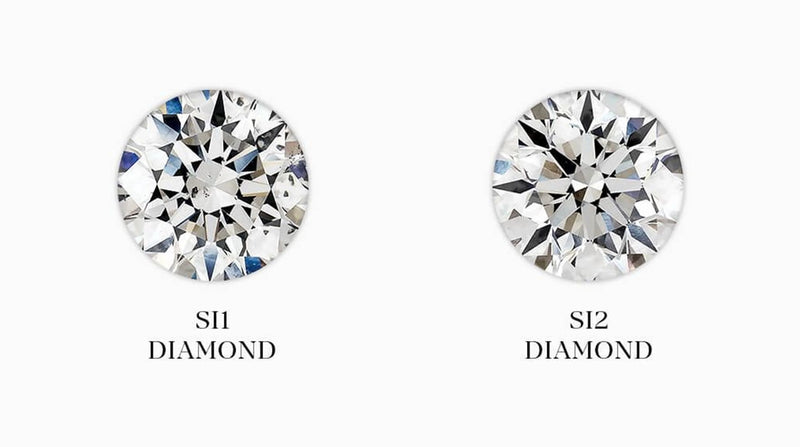
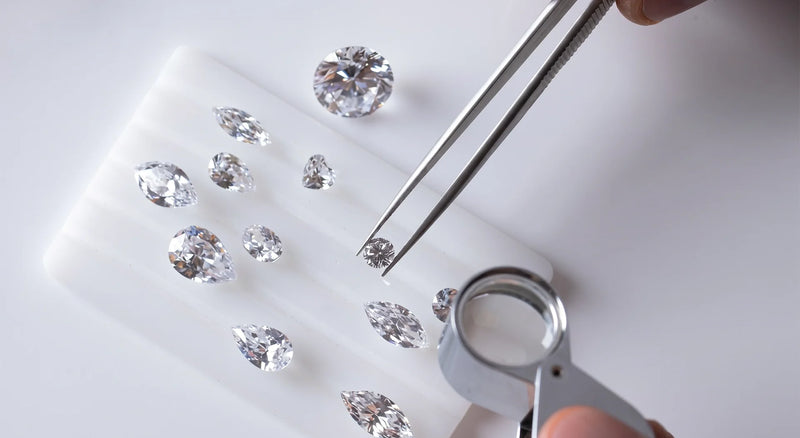
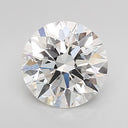
The diamond color chart, which evaluates the lack of color rather than its presence, goes from D (no tint at all) to Z (obviously yellow). The majority of individuals choose G since it is significantly less expensive than D and faces up white on the hand. Warmth begins to appear under J.
D to K Diamond color chart
Diamond color grades are assigned face-down under controlled lighting against a master set, not as the stone looks on your hand, which is why a G and a D are hard to separate once mounted.
|
Grade
|
Category
|
What you actually see on diamond
|
|
D
|
Colorless
|
No tint. The top of the scale.
|
|
E
|
Colorless
|
Indistinguishable from D outside a lab
|
|
F
|
Colorless
|
Warmth a grader can find; invisible once set
|
|
G
|
Near-colorless
|
Faces up white. Where most buyers land.
|
|
H
|
Near-colorless
|
Still reads white, even in platinum
|
|
I
|
Near-colorless
|
Very slight warmth in larger stones
|
|
J
|
Near-colorless
|
Warmth becomes visible above roughly 1.5ct
|
|
K
|
Faint
|
A warm tint you can see. Deliberate in yellow gold.
|
Further down the diamond color scale, K–M is faint, N–R very light, and S–Z light, grades rarely offered for engagement rings.
Colorless vs near colorless

Colorless is D–F. Near colorless is G–J. It's the only split on the diamond color chart that moves price much.
The useful thing is that the line is a grading distinction, not a visual one. Set a D beside a G and almost nobody picks the D. Take the D away and nobody can tell the G isn't colorless.
You're paying for a certificate line that disappears the moment the stone is mounted.
Your lab-grown diamond might not have a color grade at all
The diamond color table makes the assumption that each diamond has a grade. Since last year, lab-grown diamonds have broken that assumption.
On October 1, 2025, GIA stopped issuing D–Z grades for lab-grown diamonds. They now get a Quality Assessment carrying one of two words:
-
Premium: D color, VVS clarity or better, excellent polish and symmetry
-
Standard: E to J color, VS clarity, very good polish and symmetry
Read that Standard range again. E to J crosses the colorless line and most are near colorless. A post-October GIA assessment cannot tell you whether you hold an E or a J.
|
What the report says
|
What you know about color
|
|
IGI, any date
|
The exact grade, D–Z
|
|
GIA dated before Oct 1, 2025
|
The exact grade, D–Z
|
|
GIA "Premium"
|
D
|
|
GIA "Standard"
|
Somewhere between E and J
|
You just need a lab that continues to utilize the diamond color chart. Look for an IGI report or a GIA report from before October 2025 if a certain grade is important. Ours are IGI or GIA certified with the grade on every product page.
Best color for a lab grown diamond
G is the default. H if you want the saving, F if you want colorless on paper.
In other words, the lowest quality that still reads white in the metal of their choice is the ideal hue for consumers of lab produced diamond rings.
The math differs from natural diamonds. On a mined stone, D commands a steep premium because colorless rough is scarce. Lab-grown has no such constraint, so the curve is far flatter, tens of dollars at 1 carat, not multiples.
That changes the advice. If a colorless grade appeals to you, lab-grown is where it's affordable. A 1 carat round in D with VS1 clarity runs $399 here.
One exception. Lab diamond jewelry color is more visible in step cuts like emerald and asscher because they have large open facets and no hectic glitter to break up the view. Raise your grade over what you would receive in a round.
Does your metal change the ideal color?
More than anything else on the diamond color chart.
-
Platinum and white gold: G or better, white metal gives a stone nothing to hide behind.
-
Yellow gold: I or J is plenty, the setting warms the stone anyway.
-
Rose gold: J or K looks intentional rather than compromised.
Spend the difference on carat weight or cut instead.
Which matters more, color vs clarity?

Neither, cut beats both. But once the cut is settled. Color is the safer spend on step cuts, the reason an open table puts everything on display. Clarity is the safer bet on dazzling cuts, where dispersed light conceals little imperfections while tint builds.
This is one area where the diamond color chart misleads people: a higher letter on a poorly cut stone denotes a degradation. A well-cut G color diamond at SI1 outperforms a poorly cut D at VVS every time, and costs less. How the grades interact is in our 4Cs guide.
Do you want to compare grades yourself? Browse our lab-grown diamonds and also look for lab diamonds vs real; each stone includes its color grade and certifying lab, and we offer free delivery and 30-day returns. Our diamond color guide goes deeper on how the diamond color chart is applied by shape.
FAQs
1: Is G color good for a lab-grown diamond jewelry?
Yes, and it's the most popular grade. G faces up white in any metal, and on lab-grown the saving over D is small.
2: What's the lowest color grade that still looks white?
H in most settings, I is yellow gold. The threshold narrows by around a grade over 1.5 carats, since larger stones have a more noticeable color.
3: What color should I choose for rose gold?
J or K. Rose gold casts warmth onto the stone regardless, so a colorless grade is spending you won't ever see.
4: Does a GIA "Standard" lab-grown diamond have a color grade?
No. Standard covers E through J without specifying which. IGI or GIA dated before to October 2025 is required for a precise grade.
5: Are lab-grown diamonds whiter than natural ones?
Not inherently, but top grades are far more available and cheaper. D and E are routine in lab-grown and rare in real diamonds.
6: Does color grade affect sparkle?
No, that's cut. Color changes the tone of the light a diamond returns, not how much of it comes back.

 Moissanite Pendant
1 Carat round Moissanite Pendant in 925 Silver with Chain
Spend $1,000+