Cart
0

An engagement ring is given at the time of the proposal, typically featuring a center diamond or gemstone. A wedding ring (or wedding band) is exchanged during the marriage ceremony and is usually a simpler metal band, with or without accent stones. They are worn together on the left ring finger, with the wedding band placed closest to the hand. Some couples choose matching sets designed to nest together; others select each piece independently based on personal style.
If you're planning a proposal or preparing for a wedding, one question almost always comes up: What exactly is the difference between an engagement ring and a wedding ring?
It's a fair question. Both involve diamonds. Both live on the same finger. Both represent love and commitment. But they serve different purposes, are given at different moments, and are designed with different intentions.
At Precious Carbon, we help couples across the US navigate exactly these decisions, from choosing a diamond to designing a custom piece that fits their life. Here's everything you need to know about engagement rings vs wedding rings, clearly explained.
What Is an Engagement Ring?

An engagement ring is given during the proposal. It represents a promise, the intention to marry, and is typically the first ring exchanged in a relationship.
Engagement rings are designed to stand out. They usually feature a center stone, intricate settings, and details that make them visually striking. This is the ring that gets photographed, admired, and worn throughout the entire engagement period.
Key characteristics of an engagement ring:
-
Given at the time of the proposal
-
Features a prominent center stone, typically a diamond
-
More detailed and decorative in design
-
Worn on the ring finger of the left hand
-
Represents the promise to marry
Popular engagement ring styles at Precious Carbon:
-
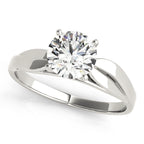
Solitaire diamond rings - timeless, clean, always elegant
-
Halo settings - a center stone surrounded by a ring of smaller diamonds
-
Three-stone rings - symbolizing past, present, and future
-
Hidden halo designs - classic from above, surprising sparkle from the side
-
Toi-et-Moi rings - two stones, one ring, deeply personal
💡 Choosing a diamond for your engagement ring? Start with the basics. Our Complete 4Cs Guide walks you through Cut, Color, Clarity, and Carat, the four factors that determine a diamond's quality and value.
What Is a Wedding Ring?

A wedding ring, also called a wedding band, is exchanged during the wedding ceremony itself. It marks the official union between two people and is worn as a permanent symbol of marriage.
Where engagement rings are designed to dazzle, wedding bands are designed for longevity. They tend to be simpler, lower-profile, and built specifically for comfortable daily wear, because you'll never take them off.
Key characteristics of a wedding ring:
-
Exchanged during the wedding ceremony
-
Typically simpler in design than an engagement ring
-
Built for everyday comfort and durability
-
Often worn alongside the engagement ring
-
Represents the lifelong commitment of marriage
Common wedding band styles:
-
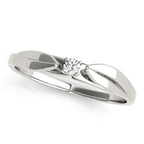
Plain gold or platinum bands - the most classic choice
-
Diamond eternity bands - diamonds set all the way around
-
Half-eternity bands - diamonds on the top half, plain metal underneath
-
Pavé bands - small diamonds set closely along the band for continuous shimmer
-
Curved or contour bands - shaped to nest perfectly against your engagement ring
Engagement Ring vs Wedding Ring: Key Differences
|
Engagement Ring |
Wedding Ring |
|
|
When given |
At the proposal |
During the wedding ceremony |
|
Design |
Detailed, center stone, decorative |
Simple, streamlined, durable |
|
Diamond focus |
Almost always features a diamond |
Optional, can be plain or diamond-set |
|
Purpose |
Promise to marry |
Symbol of marriage |
|
Typical wear |
Throughout the engagement |
Every day, for life |
|
Priority on finger |
Worn on top |
Worn closest to the hand |
Do You Wear Both an Engagement Ring and a Wedding Ring?
This is one of the most common questions couples ask, and the honest answer is: it depends on what feels right for you.
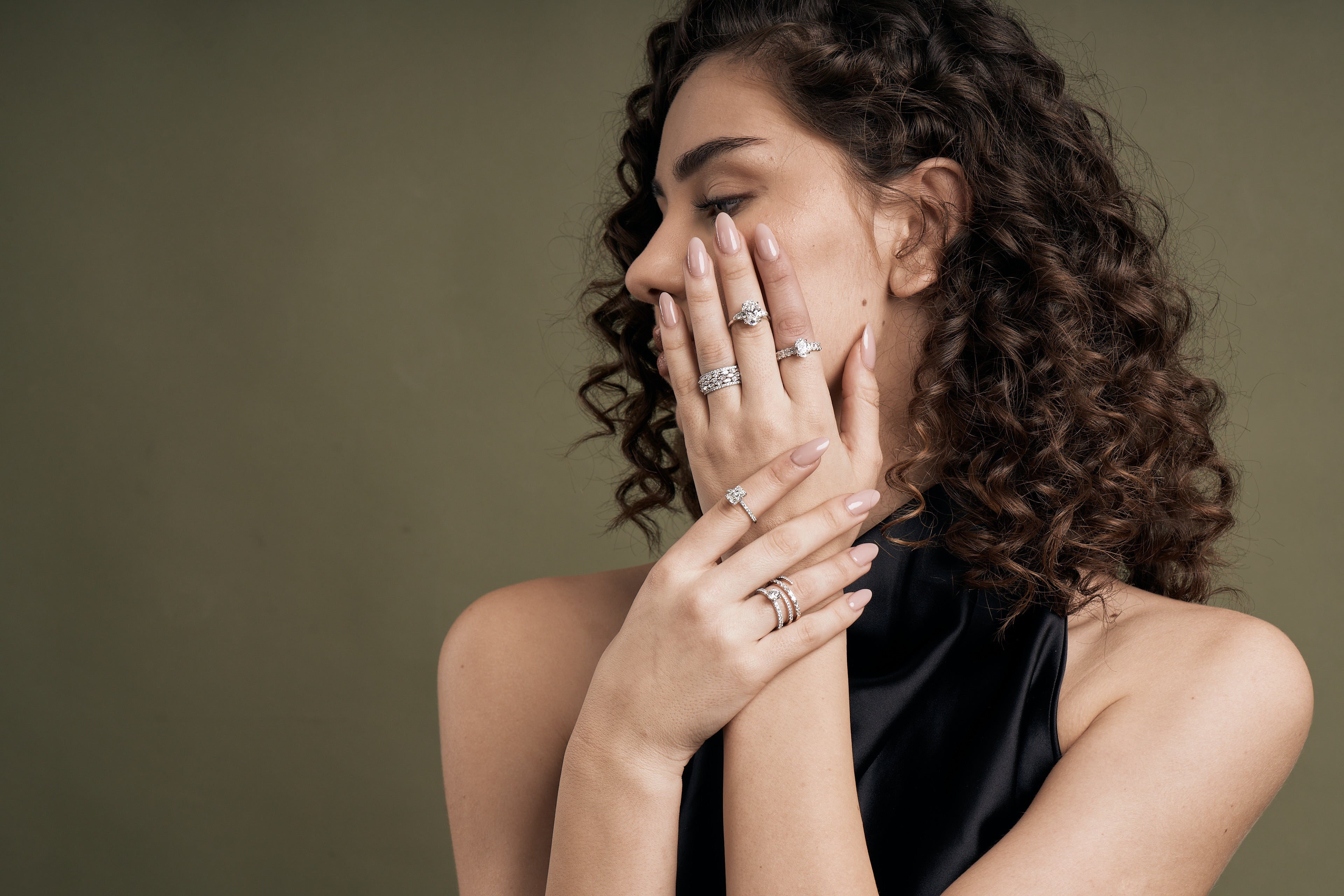
Traditionally, yes. Most couples wear both rings simultaneously after the wedding ceremony. The wedding band is placed on the finger first (closest to the heart), with the engagement ring sitting on top.
Some couples choose one ring only. A growing number of couples opt for a single ring that serves both purposes, either a wedding band worn alone or an engagement ring that doubles as the wedding ring. There's no rule against this, and it's increasingly common.
Some couples choose matching bands. Others skip the engagement ring altogether and exchange matching wedding bands during the ceremony, particularly popular among couples who prefer minimalist jewelry or want identical rings.
The only "right" answer is whatever reflects your relationship and lifestyle.
Engagement Ring vs Wedding Ring: Which Hand and Finger?
In the US, both rings are traditionally worn on the ring finger of the left hand, the fourth finger, counting from the thumb.
The tradition traces back to the Roman concept of the vena amoris, the "vein of love", believed to run directly from that finger to the heart. While anatomically a myth, the tradition stuck.
How most American couples wear both rings:
-
Wedding band first - slid on during the ceremony, sitting closest to the palm
-
Engagement ring on top - returned to the finger after the ceremony, sitting above the band
Some people find it more practical to permanently solder the two rings together so they function as one. Others prefer to keep them separate for flexibility. Both approaches are entirely valid.
Do both rings have to be on the same hand? Not necessarily. Some people move the engagement ring to the right hand during the wedding ceremony to make slipping the wedding band on easier, then move it back afterward. In some European cultures, both rings are worn on the right hand permanently. There's no universal rule.
Do You Need Both Rings?
Tradition says yes. Real life says it's entirely up to you.
Here's how to think through it:
Get both if you love the symbolism of two distinct rings, one for the promise, one for the commitment, and you enjoy wearing jewelry that tells the full story of your relationship.
Get one if you prefer simplicity, have an active lifestyle that makes wearing two rings impractical, or want to put your budget toward one exceptional ring rather than two.
Get matching bands if you and your partner want identical rings or prefer a modern approach that doesn't follow the traditional engagement ring convention.
At Precious Carbon, we help couples design both rings as a cohesive set, ensuring the engagement ring and wedding band are proportioned, styled, and shaped to complement each other perfectly.
Lab-Grown vs Natural Diamonds: Which Is Right for Your Rings?

Whether you're choosing an engagement ring, a wedding band, or both, the diamond decision is the same.
Natural diamonds are formed over billions of years and carry traditional significance. Many couples choose them for sentimental or long-term value reasons.
Lab-grown diamonds are physically, chemically, and optically identical to mined diamonds, certified by the same labs (GIA, IGI) and priced 50-70% lower for the same carat, cut, and clarity. They're the most popular choice among Precious Carbon customers in 2026 because the savings allow couples to invest in better quality or larger stones without stretching their budget.
💡 Wondering how diamond size actually translates to what you see on your finger? Our Diamond Carat Guide explains the relationship between carat weight and visual size, and why two diamonds of equal carat weight can look very different.
How to Choose Rings That Work Together
If you're buying both an engagement ring and a wedding band, designing them as a pair from the start makes a significant difference.
Things to consider:
Profile and height. A high-set solitaire engagement ring needs a wedding band with enough curvature or a gap to sit flush against it. A low-profile bezel-set ring pairs easily with almost any band.
Metal consistency. Mixing metals is a valid design choice, but if you want a unified look, match the metal type and color across both rings.
Width proportion. A delicate engagement ring pairs best with a narrow wedding band. A bold engagement ring can carry a slightly wider band.
Diamond continuity. If your engagement ring has a pavé band, consider a pavé wedding band to create a seamless, continuous sparkle effect.
Our free custom design service lets you design both rings together, with CAD previews so you can see exactly how they'll look as a set before anything is made.
Why Precious Carbon for Both Your Rings?
We design engagement rings and wedding bands as a complete system, not as separate purchases. Whether you're starting with just an engagement ring or planning both from the beginning, we'll make sure every piece works beautifully together.
What you get with Precious Carbon:
-
Lab-grown and natural diamonds - certified by GIA and IGI
-
Free custom design - CAD previews, expert guidance, no extra fees
-
Luxury at accessible prices - up to 70% less than traditional jewelers
-
Free US shipping - fast delivery under 4 weeks
Lifetime resizing and warranty - on every ring, permanently
Frequently Asked Questions:
Q1. What is the difference between an engagement ring and a wedding ring?
An engagement ring is given at the moment of proposal as a symbol of the promise to marry. It typically features a center diamond or gemstone and is worn from the engagement period onward. A wedding ring (or wedding band) is exchanged during the marriage ceremony itself and is traditionally a simpler band, with or without diamonds, that represents the completed commitment of marriage. Both are worn together after the wedding, with the wedding band typically worn closest to the hand.
Q2. Do you wear both an engagement ring and a wedding ring together?
Yes, most people wear both rings together on the left ring finger after the wedding ceremony. The wedding band is traditionally placed first (closest to the heart), with the engagement ring worn on top. Some couples have their rings custom-designed as a matched set, with the wedding band contoured to nest perfectly against the engagement ring, creating a cohesive, unified look rather than two visually separate rings.
Q3. Does the wedding ring have to match the engagement ring?
The wedding band does not have to match the engagement ring exactly, but most couples choose metals and styles that complement each other for a unified look. The most important practical considerations are metal consistency (same metal color for a seamless look), width proportion (a narrower band usually pairs best with a delicate engagement ring), and whether the band sits flush against the engagement ring without gaps. At Precious Carbon, both rings can be custom-designed together with CAD previews to ensure a perfect visual match before production.
Q4. Can you wear just an engagement ring and skip the wedding band?
Yes, absolutely. Many couples choose to wear only their engagement ring, particularly if it features a full pavé or eternity band design that functions as both rings in one. There is no rule requiring a separate wedding band - the decision comes down entirely to personal preference, lifestyle, and whether wearing two rings feels comfortable and practical for daily life. Couples who prefer simplicity or have active lifestyles often find a single beautifully chosen engagement ring more wearable day-to-day.
Q5. How much should a wedding band cost compared to an engagement ring?
Wedding bands typically cost significantly less than engagement rings because they are simpler in design, usually a plain or pavé band without a large center stone. A quality diamond wedding band ranges from $400 to $2,000+, depending on the metal, diamond content, and width. The engagement ring is traditionally the primary investment because it centers on the diamond; the wedding band is designed to complement it rather than compete with it. At Precious Carbon, buying an engagement ring and a matching wedding band together comes with a 15% discount on the band.