Cart
0

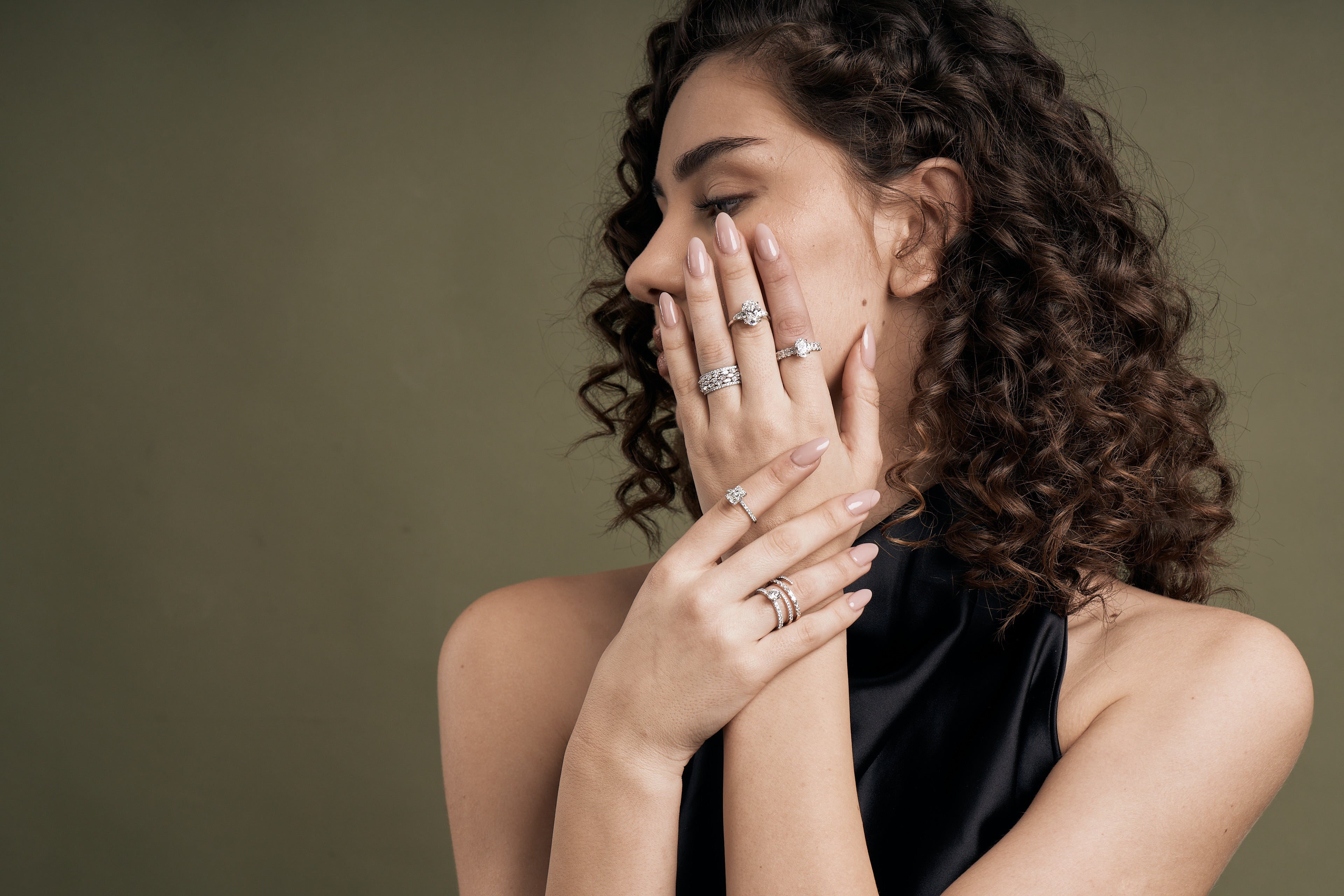
An oval cut diamond uses the same brilliant facet structure as a round, but in an elongated shape, producing comparable sparkle with a larger face-up appearance, typically 10-15% bigger than a round of equal carat weight. It visually elongates the finger and suits solitaire, halo, and three-stone settings equally well. The ideal length-to-width ratio is 1.35–1.50. Oval diamonds may display a bowtie effect across the center - always inspect the specific stone before buying.
If you asked a gemologist to design a diamond shape optimized for looking as large as possible, as flattering as possible, and as brilliantly sparkled as possible, they'd likely arrive somewhere close to the oval cut.
Elongated, brilliantly faceted, and endlessly elegant, the oval cut diamond has gone from quietly popular to one of the most requested engagement ring shapes in the world. In 2026, it shows no signs of slowing down.
This guide covers everything about the oval cut: its structure, best settings, how it wears across carat sizes, and why lab-grown oval diamonds are one of the most compelling choices available.
At Precious Carbon, we offer oval cut diamonds in lab-grown and natural options across a full range of settings and carat sizes.
What Is an Oval Cut Diamond?

The oval cut is an elongated brilliant-cut diamond with a symmetrical elliptical outline and no points or corners. It was developed in the early 1960s by Russian diamond cutter Lazare Kaplan and features 57 or 58 facets in a brilliant arrangement, the same facet count as a round brilliant, adapted to an elongated shape.
The oval cut retains approximately 95% of the light return of a round brilliant, making it the closest any elongated shape gets to the round brilliant's legendary sparkle, while adding the visual benefits of an elongated silhouette.
Key characteristics of an oval cut diamond:
-
Elliptical outline, symmetrical on both axes
-
57–58 facets in a modified brilliant arrangement
-
Ideal length-to-width ratio: 1.30:1 to 1.50:1
-
No pointed tips or sharp corners - lower vulnerability than marquise or pear
-
Creates a pronounced finger-elongating effect
-
Bow-tie effect present in most ovals - minimized in well-cut stones
💡 The oval cut sits between the round brilliant and elongated shapes, like the marquise and pear. Our Diamond Shape Guide compares every major cut so you can see exactly how the oval stacks up and find the shape that's right for you.
Why the Oval Cut Diamond Is One of 2026's Most Popular Shapes
It appears larger than its carat weight. The oval's elongated surface area means it appears noticeably larger face-up than a round brilliant of the same carat weight, often appearing 10-15% larger. For budget-conscious buyers who want visual size, this is one of the oval's most compelling qualities.
It elongates the finger beautifully. The vertical orientation of an oval on a ring creates one of the most universally flattering finger-elongating effects available. It works on narrow fingers, wider fingers, and every hand shape in between.
It's brilliantly faceted. With 57-58 brilliant-cut facets, the oval produces strong sparkle and fire across its full surface. It doesn't have the calm, linear reflections of step-cut shapes, it sparkles actively and continuously.
It has no vulnerable points. Unlike the marquise or pear, the oval has no pointed ends that can chip or require protective prongs. This makes it one of the most durable fancy shapes for daily wear.
It's versatile in setting. The oval works in solitaires, halos, three-stone settings, pavé bands, and east-west orientations. Almost no setting style is incompatible with an oval center stone.
Best Settings for Oval Cut Diamond Engagement Rings

Solitaire setting - A four or six-prong solitaire is the most popular choice for oval cut diamond engagement rings. The clean prong setting keeps the oval's full outline visible and lets the brilliant facets produce uninterrupted sparkle.
Halo setting - A round brilliant halo around an oval creates a look with remarkable visual presence. The round halo softens the oval's elongated outline into a more organic, rounded silhouette and adds significant sparkle. One of the most requested oval settings at Precious Carbon.
Hidden halo setting - Micro-pavé diamonds tucked beneath the oval center stone add sparkle visible only in profile, a sophisticated, subtle upgrade to a solitaire setting.
Three-stone setting - An oval center flanked by two smaller ovals, rounds, or pears creates a balanced, symbolic ring. The combination of an oval center with pear side stones is particularly harmonious - the shapes complement each other's curves naturally.
Pavé band - An oval center on a pavé-set band is one of the most consistently popular engagement ring combinations for oval cuts, with continuous sparkle that flows from band to stone without interruption.
East-West setting - The oval set horizontally across the finger creates a bold, contemporary look. The wide, short silhouette reads very differently from the classic vertical orientation, modern, architectural, and distinctive.
Oval Cut Diamond Ring: Carat Size Guide

1 carat oval cut diamond – A 1 carat oval appears larger than a 1 carat round due to its elongated surface area. The finger-elongating effect is already clear at this size, and the ring has meaningful presence without being large.
2 carat oval cut diamond - The most popular carat choice for oval engagement rings. At 2 carats, the oval's elongated shape creates a genuinely striking ring, large enough to create real presence on the hand, elegant enough to wear comfortably every day.
3 carat oval cut diamond - A 3 carat oval cut diamond is a statement ring. The elongated silhouette at this weight creates a dramatically long, brilliant stone that commands attention from any distance.
💡 The oval's elongated shape means 2 carats looks very different from 2 carats in a round or square cut. Our Diamond Carat Guide shows you what each carat size actually looks like face-up across different shapes, including the oval.
Lab-Grown Oval Cut Diamonds
Oval cut lab grown diamonds are one of the most popular choices at Precious Carbon, and for good reason. The oval's large surface area means that carat size is visually significant: moving from 1.5 carats to 2 carats creates a noticeable difference on the hand.
Lab-grown oval diamonds allow buyers to make that move without changing their budget. At 50-70% less than equivalent natural ovals, certified by GIA or IGI, and physically identical to mined stones, lab-grown oval cuts are a compelling option for anyone who wants maximum visual size at accessible prices.
Why Precious Carbon for Your Oval Cut Diamond
Every oval cut diamond at Precious Carbon is GIA or IGI certified. We offer lab-grown and natural options across a full range of carat sizes and settings. Our free custom design service lets you design your ideal oval cut ring with CAD previews before a single piece is produced.
What's included with every purchase:
-
GIA or IGI certified diamonds
-
Free custom design - no extra fees
-
Up to 70% less than traditional jewelers
-
Free US shipping - delivery under 4 weeks
-
Lifetime resizing and warranty
Frequently Asked Questions:
Q1. What is an oval cut diamond?
An oval cut diamond is an elongated, elliptical version of the round brilliant, with 58 facets designed to maximize brilliance and fire. It delivers nearly the same light performance as a round diamond while appearing larger per carat due to its wider surface area. The oval cut is currently one of the most popular engagement ring shapes globally.
Q2. Why are oval diamonds so popular right now?
Oval diamonds are trending because they offer three major advantages over round diamonds: they look 10% larger per carat, they elongate and slim the finger, and they cost 20-30% less per carat for equivalent quality. They combine the brilliance of a round diamond with a more distinctive, flattering silhouette, making them the top choice for buyers who want maximum visual impact within a budget.
Q3. Do oval cut diamonds have a bowtie effect?
Yes, oval cut diamonds can show a bowtie, a dark shadow across the center caused by light escaping through certain facets rather than reflecting. The degree varies from nearly invisible to very noticeable, depending on the diamond's cut proportions. Always review a video of the specific oval diamond before purchasing, and prioritize well-proportioned stones with an Excellent or Very Good cut grade to minimize the bowtie.
Q4. What length-to-width ratio is best for an oval diamond?
The most popular length-to-width ratio for oval diamonds is between 1.30 and 1.50. Ratios below 1.30 appear rounder and wider; ratios above 1.50 look more elongated and slender. A ratio around 1.35–1.45 is the sweet spot that most buyers find most flattering, balanced, finger-slimming, and visually distinctive without being overly narrow.
Q5. What color grade should I choose for an oval cut diamond?
G or H color is the recommended sweet spot for oval cut diamonds set in white gold or platinum - the shape hides color reasonably well, and these grades face up white to the naked eye. In yellow or rose gold settings, H-I color works well because the metal's warmth complements rather than contrasts with the diamond. Avoid going below I color in platinum or white gold settings, as the warmth becomes more visible in oval cuts than in round brilliants.